

10 PU Leather Buying Tips for Global Buyers
Buying pu leather across borders is not simply a matter of choosing the lowest quotation. A swatch may look smooth under showroom lights, yet crack after repeated folding or release a strong chemical odor in a closed room. Global buyers need evidence, not attractive photographs. They should examine the face film, textile backing, thickness, grain consistency, colorfastness, and intended end use. A material suitable for handbags may fail on vehicle seats or contract furniture.
This guide, “10 PU Leather Buying Tips for Global Buyers,” reflects practical sourcing concerns from sampling, factory communication, and quality inspection. Request production samples, not only showroom pieces. Check abrasion results, hydrolysis resistance, tear strength, and flexibility at realistic temperatures. Ask how measurements are taken and whether test reports match the actual factory and material batch. Compliance documents also require careful review. Requirements can differ by destination, product category, and customer specification.
Small details matter.
Confirm roll width, usable area, minimum order quantity, packing method, and replacement terms before payment. A supplier’s fast reply does not prove reliable production. Factory audits, traceable records, and independent testing provide stronger confidence. Still, no checklist removes every risk. A sample can pass while bulk production varies. That possibility deserves attention. Buyers should keep sealed reference samples, approve color standards, and record every change in writing. These ten tips aim to make pu leather purchasing more measurable, transparent, and commercially realistic for international teams.
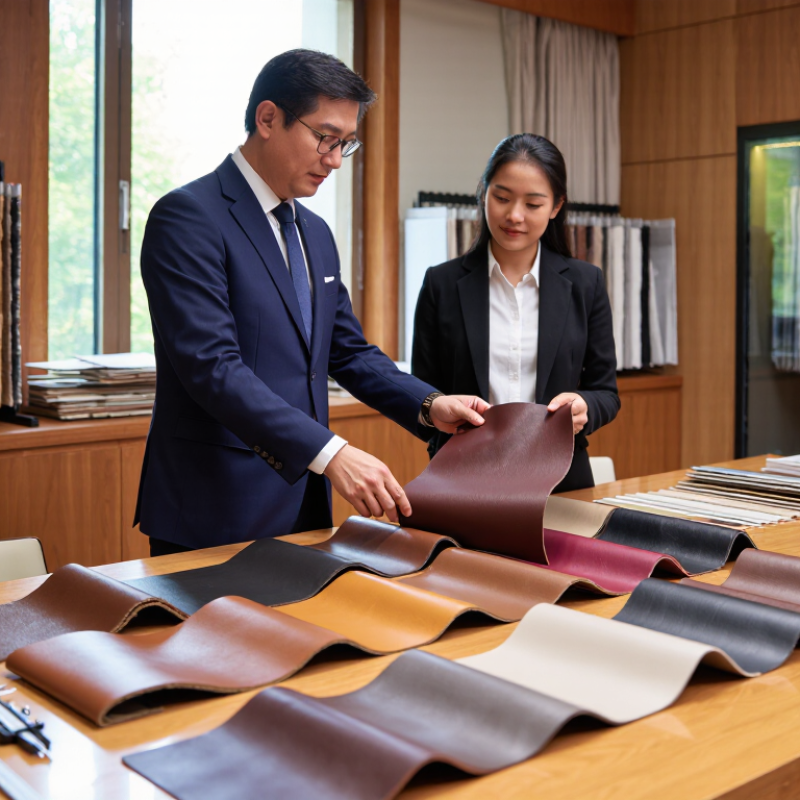
Understanding PU Leather Types and Core Material Differences
PU leather is not one uniform material. It usually combines a polymer coating with a textile backing. The coating may be solvent-based or water-based. Solvent-based PU often feels smoother and more flexible. Water-based PU can offer a softer touch and lower odor. However, performance depends on the formula and curing process. A sample alone cannot reveal every production risk.
Tip: Ask for the coating type, backing composition, thickness, and test results. Do not accept “premium PU” as a technical specification. Polyester backing usually offers stable dimensions and good abrasion resistance. Cotton backing feels natural but may absorb moisture more easily. Nonwoven backing can reduce cost, yet it may tear under repeated stress. Microfiber backing often provides a denser structure and more leather-like handling.
Core material differences affect strength, comfort, and price. During factory inspections, I check the reverse side, edge splitting, surface recovery, and seam behavior. A strong face can still fail when the backing is weak. Rub the surface with a dry cloth, bend it repeatedly, and inspect for whitening or peeling. These simple checks are useful, but they are not laboratory testing.
Tip: Compare identical colors across suppliers. Dark pigments can hide small coating defects. Request samples from mass production, not only showroom pieces. I once relied too heavily on a clean sample; the bulk roll showed uneven backing density. That mistake changed my inspection process. Ask for controlled tests covering abrasion, hydrolysis, flexing, and color transfer before approving large quantities.
10 PU Leather Buying Tips for Global Buyers - Understanding PU Leather Types and Core Material Differences
| No. | Buying Tip | PU Leather Type | Core Material and Construction | Key Performance Considerations | Typical Applications | Buyer Checks |
|---|---|---|---|---|---|---|
| 1 | Identify the polymer system before comparing prices. | Polyether PU | A polyurethane coating applied to a textile backing, commonly polyester, cotton, or a blended fabric. Polyether-based PU uses polyether segments in its polymer structure. | Generally offers better hydrolysis resistance than polyester-based PU, especially in warm and humid conditions. Actual performance depends on formulation, coating thickness, and finishing. | Humid-climate upholstery, bags, footwear components, and products exposed to repeated moisture. | Request the polymer type, hydrolysis test method, test duration, temperature, humidity, and pass/fail criteria. |
| 2 | Use polyester PU when abrasion and surface feel are the priority. | Polyester PU | A polyurethane coating containing polyester segments over a woven or nonwoven textile substrate. | Can provide good abrasion resistance, tensile strength, and a smooth appearance. It may be more vulnerable to hydrolysis than polyether PU under prolonged heat and humidity. | Furniture panels, fashion accessories, automotive-style trim, and indoor products where environmental exposure is controlled. | Compare hydrolysis resistance with abrasion, flexing, adhesion, and low-temperature cracking results rather than relying on appearance alone. |
| 3 | Distinguish coated fabric from microfiber PU leather. | Microfiber PU | A three-dimensional microfiber nonwoven base, often made from polyester or nylon microfibers, combined with polyurethane impregnation and a surface layer. | Usually provides a more uniform cross-section, good tear strength, dimensional stability, and a leather-like hand compared with simple flat coated fabric. | Footwear uppers, durable bags, upholstery, gloves, and applications requiring a stronger support structure. | Check backing density, thickness uniformity, fiber composition, tear strength, flex resistance, and delamination strength. |
| 4 | Select the backing according to load and drape requirements. | Textile-Backed PU | A PU surface layer supported by woven, knitted, or nonwoven fabric. Polyester backings are common; cotton and blended backings are also used. | Woven backings generally improve dimensional stability, knitted backings improve stretch and drape, and nonwoven backings can provide a soft, uniform feel. | Garment panels, upholstery, covers, accessories, and products requiring different levels of flexibility. | Confirm fabric construction, basis weight, stretch direction, seam behavior, coating adhesion, and backing fiber content. |
| 5 | Do not confuse solvent-based and water-based PU by appearance alone. | Water-Based PU | Polyurethane dispersion or related water-based coating applied to a textile substrate. Water is used as the primary carrier during processing. | May support lower solvent emissions during production, but final durability depends on resin chemistry, curing, coating weight, and finishing. “Water-based” does not automatically mean biodegradable. | Interior products, accessories, upholstery, and projects with specified solvent-emission requirements. | Ask for volatile organic compound data, restricted-substance compliance, coating composition, curing conditions, and finished-product test results. |
| 6 | Match thickness to the product rather than choosing the thickest material. | Light, Medium, or Heavy PU | Total thickness consists of the PU surface layers plus the textile backing. Thickness alone does not reveal coating quality or backing strength. | Thicker material may improve body and wear resistance, while thinner material may provide better flexibility and easier sewing. Excessive thickness can increase stiffness and edge bulk. | Thin grades for apparel and small accessories; medium grades for bags and footwear; heavier grades for upholstery and protective covers. | Specify total thickness tolerance, coating thickness if relevant, weight per square metre, bending stiffness, and intended construction method. |
| 7 | Evaluate the topcoat because it controls many surface properties. | Matte, Gloss, or Protective Topcoat | A transparent or pigmented finishing layer placed over the embossed PU surface to modify gloss, touch, stain resistance, and protection. | Topcoats can improve cleanability and resistance to scuffing, but they may change softness, breathability, color, and repairability. | Furniture, bags, footwear, vehicle interiors, and products requiring a specified visual finish. | Test color fastness, crocking, scratch resistance, stain removal, gloss level, surface tack, and finish compatibility with cleaning agents. |
| 8 | Treat hydrolysis resistance as a climate-specific requirement. | Hydrolysis-Resistant PU | Usually based on a formulation and construction designed to slow moisture-and-heat degradation of the polyurethane layer and its bond to the backing. | Important for hot, humid supply chains and end-use environments. Hydrolysis can cause stickiness, cracking, peeling, or surface breakdown over time. | Automotive interiors, marine-adjacent products, humid-region furniture, footwear, and long-life goods. | Require a recognized hydrolysis test report, defined test conditions, sample age, failure description, and production-batch traceability. |
| 9 | Verify mechanical performance after finishing and embossing. | Embossed or Printed PU | A PU-coated textile with a mechanically embossed grain, printed pattern, or multilayer decorative surface. | Embossing and printing can affect flex cracking, coating adhesion, abrasion, color migration, and the consistency of the visible grain. | Decorative upholstery, handbags, footwear, wallets, packaging accessories, and interior trim. | Inspect full-width samples and test flexing, grain retention, print adhesion, color transfer, abrasion, and surface cracking. |
| 10 | Confirm compliance, care instructions, and batch consistency before ordering. | Specification-Driven PU | Any PU construction selected against documented requirements for chemical content, physical performance, dimensions, color, and production tolerances. | A material can meet one performance target while failing another. Consistent production control is essential for repeat orders and international shipments. | All commercial uses, particularly products subject to import regulations, consumer-safety requirements, or contract specifications. | Approve a sealed reference sample, define inspection limits, request safety and restricted-substance documentation, verify labeling, and record care instructions. |
Related Posts
-
Top 10 Benefits of Using PU Leather for Your Business Needs?
-
7 Inspiring Ways to Elevate Your Style with Leather Material
-
What Are the Top Outdoor Fabrics for 2026?
-
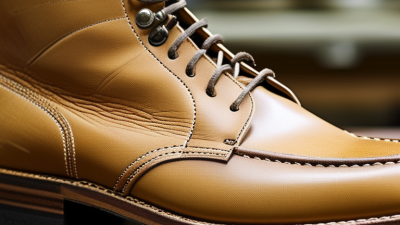
Why Choose Leather Material for Global Sourcing?
-
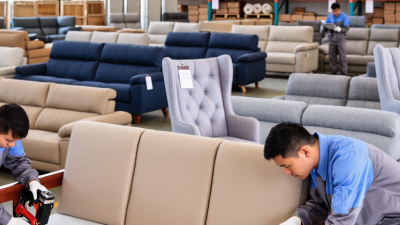
China Top 10 Furniture Upholstery Manufacturers
-
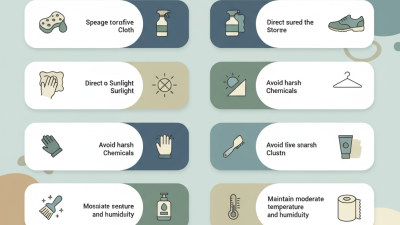
10 Essential Tips for Caring for Your PU Leather Items?