China Top 10 Furniture Upholstery Manufacturers
China’s furniture industry combines large-scale production with increasingly refined upholstery craftsmanship. This guide introduces ten leading Chinese furniture upholstery manufacturers for buyers seeking reliable sourcing partners. It considers manufacturing experience, material control, design capability, export performance, and after-sales communication.
A strong manufacturer should offer more than attractive showroom pieces. Buyers need clear fabric specifications, consistent foam density, secure frame construction, and accurate stitching. Practical checks matter. Look for abrasion testing, colorfastness reports, fire-safety documentation, and transparent quality-control procedures. Factory photographs can help, but an independent audit offers stronger evidence. Sample approval remains essential before placing a larger order.
The selected companies may serve different markets, from hospitality seating to residential sofas and custom contract furniture. Some focus on high-volume production, while others compete through handcrafted details and flexible customization. Their minimum order quantities, lead times, export experience, and packaging standards should be compared carefully.
Not every polished showroom tells the whole story. A manufacturer may display excellent prototypes yet struggle with repeat production. That gap deserves attention. Buyers should ask how fabric batches are recorded, how defects are handled, and who manages final inspections. Communication can reveal more than a catalog.
This overview is designed as a practical starting point, not a permanent verdict. Market rankings change, and public information can be incomplete. Still, careful comparison can reduce sourcing risks and support better decisions. The right furniture upholstery partner should combine technical skill, honest documentation, responsive service, and dependable production discipline. Small details matter. A straight seam, clean corner, and properly protected cushion often reveal the factory’s real standards.
Furniture Upholstery Manufacturing in China: Scope and Key Products
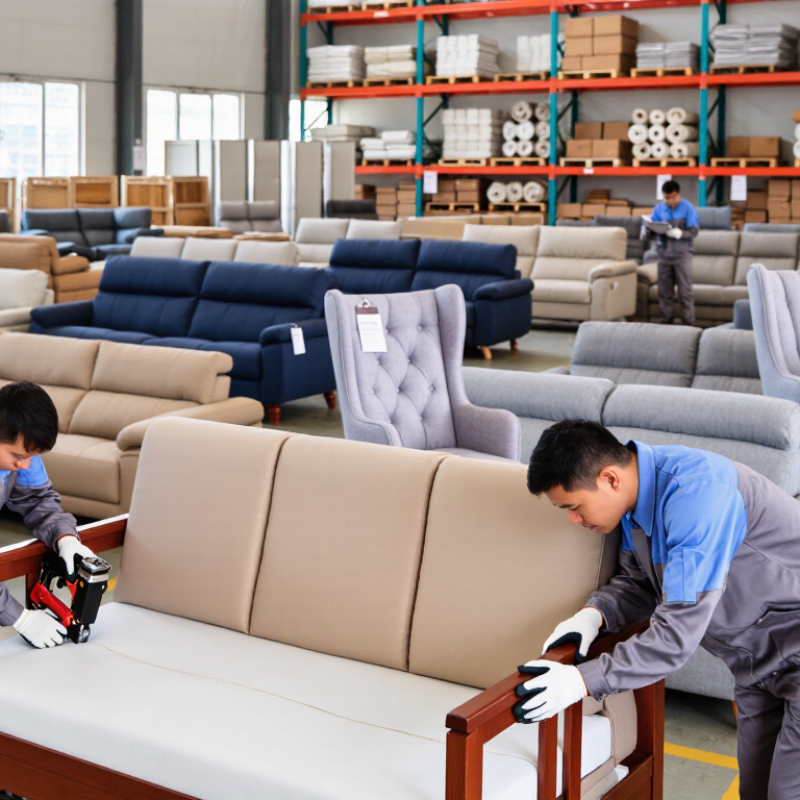
China’s furniture upholstery manufacturing sector covers far more than fabric sewing. It includes frame preparation, foam cutting, webbing installation, stitching, padding, assembly, and final inspection. China’s National Bureau of Statistics reported 655.7 billion yuan in operating revenue for furniture manufacturers above designated size in 2023. Upholstery is only one segment, but it supports sofas, lounge chairs, dining chairs, beds, ottomans, and commercial seating.
The production chain is highly specialized. Workshops commonly use automated fabric cutters, programmable sewing machines, foam saws, and pressure-testing equipment. Typical outputs include leather-look upholstery, woven fabric covers, removable cushion sets, fire-resistant seating materials, and modular sofa components. CSIL’s World Furniture Outlook 2024 identifies China as the world’s largest furniture producer, supported by broad supplier networks and export capacity. That scale helps buyers compare fabric, foam density, frame materials, and packaging within one sourcing region.
Quality still varies between factories. That matters. A reliable manufacturer should document seam strength, colorfastness, foam recovery, formaldehyde limits, and load performance. ASTM, EN, and ISO-based testing may be requested according to the destination market. The 2023 revenue figure also has limits because it excludes smaller workshops and does not isolate upholstery production. Buyers should therefore inspect production samples, not rely only on factory profiles. A sofa can look excellent in a showroom yet develop loose seams after repeated use. That risk is easy to underestimate.
How Leading Chinese Upholstery Manufacturers Are Evaluated
China Top 10 Furniture Upholstery Manufacturers
How Leading Chinese Upholstery Manufacturers Are Evaluated
Evaluating Chinese upholstery manufacturers requires more than comparing catalog photos. China Customs reported furniture and parts exports of approximately US$73 billion in 2023. This scale shows strong production capacity, but volume alone proves little. Buyers should examine factory experience, sewing accuracy, foam density, frame construction, and repair procedures. A showroom may look polished. The production floor tells more.
Professional audits should review measurable evidence. ISO 9001 records can indicate process control, while laboratory reports should verify fabric abrasion, colorfastness, flammability, and formaldehyde limits. The American Society for Testing and Materials provides recognized methods for several upholstery tests. The Business and Institutional Furniture Manufacturers Association also publishes performance standards used in commercial seating. These references help buyers compare suppliers fairly.
Check sample consistency.
Mordor Intelligence estimates that the global furniture market will continue expanding through this decade, increasing pressure on manufacturers to deliver faster and cheaper. That pressure can affect inspection quality. Buyers should request batch records, incoming-material logs, moisture checks, and final inspection data. A supplier claiming a defect rate below one percent should explain its sampling method. The number may be real, but the measurement could be narrow. Factory visits are valuable, although one visit cannot confirm long-term reliability. Repeated orders, independent testing, and clear corrective-action reports provide stronger evidence. Even experienced evaluators can miss hidden weaknesses.
Profiles of China’s Top 10 Furniture Upholstery Manufacturers
These ten profiles are best read as a capability comparison, not a definitive ranking. Each should examine frame construction, upholstery options, order flexibility, and quality checks. One factory may specialize in hardwood frames; another may handle modular sofas or large contract orders. Look for practical evidence: clean seam alignment, reinforced corners, foam specifications, and fabric abrasion-test records. Small details matter. Grand View Research estimated the global upholstered-furniture market at US$58.7 billion in 2023 and forecast 5.1% annual growth from 2024 to 2030. That growth makes production consistency and material sourcing increasingly relevant.
A useful profile also explains what a manufacturer does less well. Ask how it manages color variation between fabric batches, repairs defective stitching, and checks frame stability before packing. Sample-room quality is not enough. Factory capacity figures need context, too: seasonal labor, custom orders, and inspection standards can change actual delivery performance. The profiles should distinguish export experience from verified process control, and separate a sales claim from documented test results. Public market reports describe demand, not individual factory performance; buyer audits and sample testing remain necessary. Some comparisons will stay incomplete when production records are not disclosed.
China Top 10 Furniture Upholstery Manufacturers
Profile overview of the main capabilities commonly assessed among leading Chinese furniture upholstery manufacturers.
The chart compares key profile dimensions used when evaluating furniture upholstery manufacturers, including custom production, contract manufacturing, export capability, sustainable material options, and quality-system certification. Values are shown as a comparative index rather than company-specific financial data.
Comparing Materials, Product Lines, and Production Capabilities
When comparing China’s top ten furniture upholstery manufacturers, materials reveal more than catalog photographs.
CSIL’s World Furniture Outlook 2024 estimates that China produces about 37% of global furniture by value. That scale supports wider fabric sourcing, faster sampling, and stronger component integration.
Polyester blends usually offer abrasion resistance and cost control. Linen blends provide a softer, more natural surface, but they wrinkle easily.
Leather delivers durability and visual depth, while performance fabrics suit hotels, apartments, and family homes. Foam density matters too.
A comfortable sofa should balance resilience, compression, and seat depth, not simply use “high-density foam.” Some manufacturers list foam grades clearly. Others do not. That gap deserves attention.
Product lines range from dining chairs and modular sofas to recliners, bed frames, and contract seating.
Production capability should be checked through measurable details: cutting equipment, sewing cells, frame materials, foam testing, monthly capacity, and sampling speed.
Grand View Research forecasts steady growth in the global upholstered furniture market through 2030, increasing pressure for flexible and repeatable production.
A factory may claim large capacity, yet manual sewing can limit consistency during peak orders. A polished showroom proves little.
Ask for seam samples, fabric abrasion results, carton tests, and recent production records. Lead times also need careful review, especially when custom fabrics or imported hardware are involved.
Key Considerations for Sourcing from Chinese Manufacturers
China Top 10 Furniture Upholstery Manufacturers
Sourcing upholstery from Chinese manufacturers requires more than comparing catalog prices. Start by checking production experience, workshop capacity, and export history. Request factory photos, current certifications, and recent project references. A video call can reveal useful details, such as fabric storage, stitching areas, and quality inspection routines.
Ask for a complete material specification before requesting a quotation. Confirm fabric composition, foam density, frame timber, spring structure, fire performance, and packaging method. Do not accept “high quality” as a technical description. Request samples with matching colors, seam spacing, cushion firmness, and dimensions. Test them after repeated sitting. Small differences become expensive across a full container.
Pricing needs careful interpretation. A low quotation may exclude tooling, inner packaging, inspection, or port charges. Compare offers line by line. Agree on acceptable defects, replacement procedures, production deadlines, and payment milestones in writing. Independent inspection before shipment can reduce surprises, but it cannot replace clear communication. That lesson is easy to ignore. Time zones, translation gaps, and changing materials may still cause mistakes. Keep one approved sample and one signed specification sheet. Recheck both before mass production. Reliable sourcing is not effortless, and even experienced buyers should question their assumptions.