

Blog
Blog
Blog
Why Choose Zebra Window Blinds for Modern Homes?
Modern homes need window treatments that balance light, privacy, comfort, and visual simplicity. Zebra Window Blinds offer a practical answer through alternating sheer and solid fabric bands. With one smooth adjustment, daylight can filter across a living room, or privacy can become nearly complete. The effect feels controlled, not heavy.
Window-covering expert Deb Barrett has said, “A window covering must serve the room before it decorates it.” That principle explains the growing appeal of Zebra Window Blinds. Their clean horizontal lines suit minimalist interiors, while their layered fabric adds softness beside glass, concrete, wood, or metal. Homeowners can also choose different openness levels, fabrics, and colors for bedrooms, kitchens, and workspaces. Small details matter. A warm beige shade may soften harsh afternoon light. A charcoal fabric can frame a large window with quiet confidence.
They are not perfect. Dust may collect along the fabric bands, and low-quality mechanisms can feel disappointing after repeated use. Installation also deserves care, especially near deep window frames or wide openings. Measuring twice is sensible. Choosing certified materials and a reputable supplier improves safety, durability, and long-term value. In my view, Zebra Window Blinds work best when treated as functional architecture, not a fashionable accessory. They should reduce glare, protect indoor comfort, and complement the room’s daily rhythm. The right choice is rarely the most expensive one. It is the one that performs reliably every morning.
What Are Zebra Window Blinds and How Do They Work?
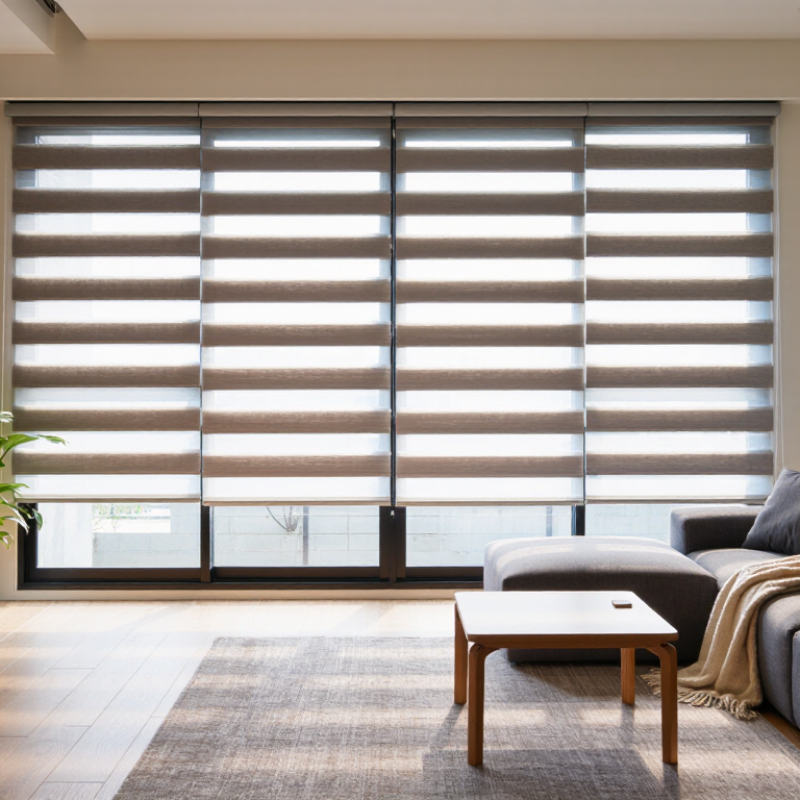
Zebra window blinds use two layers of fabric with alternating sheer and opaque bands. The layers move independently as the blind rolls or lowers. When the bands overlap, sunlight enters through soft, filtered gaps. When solid bands align, the room gains stronger privacy and darker conditions. This simple adjustment suits bedrooms, living rooms, and home offices.
In practical use, the blind can stop glare without completely blocking daylight. I find this useful near computer screens, although the result changes with window direction and fabric color. Light fabrics create a brighter atmosphere, while darker fabrics reduce reflections more effectively. A cordless or motorized design may improve safety and convenience, but installation quality still matters. Uneven brackets can make the bands look misaligned. That detail is easy to overlook.
Tips: Measure the window at three points before ordering. Record the smallest width for an inside mount. Keep the fabric away from damp areas, because moisture may cause staining or distortion. Test the blind at different times of day. Morning sunlight can reveal problems that evening light hides. Choose a fabric openness level carefully. More openness preserves views, but it may reduce nighttime privacy. Regular dusting with a soft brush helps maintain smooth movement.
How Zebra Blinds Improve Light Control and Privacy
In modern homes, zebra window blinds offer a practical way to adjust daylight without making a room feel closed. Their alternating sheer and opaque bands create filtered, clearer, or darker light. Light changes. In practice, a small adjustment can reduce screen glare. It can still preserve a view of trees or neighboring roofs. This layered design also softens harsh afternoon sun and may help reduce prolonged exposure on furnishings. It does not replace quality glass or thoughtful window placement. Measured installation matters. Uneven mounting can leave gaps and make the stripes look misaligned.
Privacy matters. With the opaque bands aligned, passersby see less of the room, especially at eye level. At night, interior lighting can still reveal silhouettes through uncovered sections. Closing the blinds more fully is usually necessary. This limitation is easy to overlook. For bedrooms and street-facing rooms, check privacy from outside before choosing the final fabric and height. A denser material may feel more secure. A lighter one keeps the room brighter. The best option depends on window direction, nearby buildings, and daily routines. Zebra blinds are not perfect. Their cords can create a safety concern when poorly managed, so secure installation and regular checks remain important.
Why Choose Zebra Window Blinds for Modern Homes?
Zebra blinds combine alternating sheer and opaque fabric bands, allowing homeowners to adjust daylight and privacy without fully raising the blind.
Key insight: Aligning the sheer bands maximizes natural light, while aligning the opaque bands provides the highest privacy. The partially closed position offers a practical balance for everyday living spaces.
Why Zebra Blinds Suit Modern Interior Design
Why Choose Zebra Window Blinds for Modern Homes?
Modern homes often need light control without visual heaviness. Zebra blinds suit this goal through alternating sheer and opaque fabric bands. During home assessments, installers often see them soften strong sunlight in living rooms. A small adjustment changes the atmosphere quickly. Their horizontal pattern also echoes clean furniture lines, pale wood, and simple metal details.
Interior designers value zebra blinds for flexible daylight management. Open bands admit filtered light, while closed bands reduce glare and improve privacy. This feature works well near desks, televisions, and large glass doors. Precise measurements matter, especially around deep frames or uneven walls. Poor alignment can make an otherwise refined room look unfinished. That detail is easy to overlook.
Neutral fabrics support calm interiors, while darker tones create stronger contrast. However, the striped pattern may feel busy in compact rooms with patterned furniture. I once underestimated this effect in a small bedroom design. A softer fabric would have worked better. Sample materials in the actual room before ordering. Check them under morning, afternoon, and evening light. Regular dusting with a soft brush can also preserve the fabric’s clean appearance.
What Materials, Colors, and Features Can Homeowners Choose?
Why Choose Zebra Window Blinds for Modern Homes?
Zebra window blinds use alternating sheer and opaque fabric panels. Homeowners can adjust daylight without fully opening the shade. Polyester is a common choice because it resists wrinkles and keeps its shape. Some moisture-resistant fabrics suit kitchens and bathrooms better. However, no material performs perfectly in every room. I have seen light fabrics show dust sooner than expected, especially near open windows.
Color strongly affects the room’s mood. White, ivory, and pale gray reflect more daylight and make small rooms feel larger. Charcoal, navy, and warm brown add depth to spacious interiors. Natural beige can soften rooms with wood flooring or stone surfaces. Choose a shade that matches permanent features, not temporary decorations. A sample beside the wall is more reliable than a screen image.
Tips: Check the fabric’s openness, cleaning instructions, and light-filtering level before ordering. Consider cordless operation for homes with children or pets. Motorized controls may improve convenience, but they require charging or installation planning. Measure the window in three places, since older frames may not be perfectly square. Blackout fabric can darken a bedroom, yet side gaps may still admit sunlight. That detail is easy to overlook.
| Decision Dimension | Common Choice | Typical Specification or Performance | Practical Benefit |
|---|---|---|---|
| Basic Construction | Alternating sheer and opaque horizontal fabric bands | The front and rear bands align or overlap as the shade is adjusted | Provides more flexible light and privacy control than a single-layer shade |
| Most Common Material | Polyester fabric | Lightweight, dimensionally stable, and available in woven or textured finishes | Offers a broad combination of appearance, durability, and easy maintenance |
| Alternative Material | Polyester blend or coated textile | May combine polyester with other fibers or a surface coating for added structure or shading | Creates more options for texture, opacity, and room-specific performance |
| Sheer Band | Open-weave or translucent fabric | Filters daylight while maintaining some outward visibility when the bands are aligned | Softens glare and helps rooms feel brighter without fully opening the blind |
| Opaque Band | Tightly woven or room-darkening fabric | Reduces incoming daylight and limits visibility through the covered sections | Improves privacy and is useful for bedrooms, media rooms, and nurseries |
| Light-Control Positions | Open, filtered, and closed | Band alignment changes the proportion of sheer and opaque fabric across the window | Supports different needs throughout the day without replacing the window covering |
| Privacy Level | Adjustable from moderate to high | Privacy depends on band position, fabric opacity, interior lighting, and the time of day | Allows homeowners to balance daylight with privacy more precisely |
| Color Families | White, ivory, beige, gray, taupe, charcoal, and muted colors | Neutral shades are widely used; darker colors generally create stronger visual contrast | Coordinates easily with modern walls, flooring, furniture, and metal finishes |
| Color Selection Tip | Light shades for an airy look; medium or dark shades for contrast | Actual appearance varies with natural light, artificial lighting, and screen settings | Sample swatches help homeowners evaluate color and texture in the intended room |
| Operating Methods | Continuous loop, cordless, or motorized operation | Availability depends on the blind design, window size, installation requirements, and local safety rules | Provides choices for convenience, child safety, accessibility, and hard-to-reach windows |
| Motorized Features | Remote control, wall control, timer, or smart-home integration | Requires compatible hardware and, for some systems, a power source or rechargeable battery | Makes daily adjustment easier and can support scheduled light management |
| Room Suitability | Living rooms, bedrooms, offices, dining areas, and guest rooms | Select moisture-resistant materials carefully for kitchens and bathrooms | Works across many interior styles while allowing room-by-room light control |
| Maintenance | Regular dusting and gentle spot cleaning | Use a soft brush, vacuum with a suitable attachment, or a slightly damp cloth; follow the care label | Helps preserve the fabric surface and keeps the alternating bands looking even |
| Window-Fit Options | Inside mount or outside mount | Inside mounting fits within the frame; outside mounting covers part of the wall around the window | Supports a clean built-in appearance or broader light and privacy coverage |
| Best Overall Advantage | One shade with adjustable visual openness | Combines sheer daylight filtering with opaque privacy bands in a layered design | Offers a modern appearance, flexible control, and multiple material and color choices |
How to Evaluate Installation, Maintenance, and Long-Term Value
Why Choose Zebra Window Blinds for Modern Homes?
Installation decides whether zebra blinds perform well or merely look attractive. Measure each window separately, including recess depth, handles, and frame irregularities. A two-layer fabric system needs accurate alignment. Otherwise, stripes may appear uneven when opened. Professional installers should check mounting strength and operating clearance. The U.S. Department of Energy notes that window attachments can reduce solar heat gain by up to 77% when properly selected and used. That figure is not a promise for every home.
Maintenance is simple, but not effortless. Dust the fabric weekly with a soft brush or low-suction vacuum. Avoid soaking the layers, because trapped moisture can encourage mildew. Test the chain, cord, or motor during cleaning. The U.S. Consumer Product Safety Commission continues to identify window-covering cords as a safety concern, especially around children and pets. Cordless operation deserves serious consideration. Small details matter.
Long-term value depends on fabric quality, repair access, and energy performance. ASHRAE’s Handbook—Fundamentals explains how solar heat gain varies with glazing, orientation, and shading. South-facing rooms may benefit more than shaded rooms. I would not judge value by price alone. A cheaper blind can become expensive after warped fabric or unavailable parts. Keep installation records and care instructions. Even careful evaluation has limits. Climate, glass type, and daily use can change the result.