

China Top Embossed Fabric Suppliers for Global Buyers
China has become a practical sourcing center for Embossed Fabric, offering diverse textures, competitive production capacity, and flexible customization. Global buyers can find polyester velvet, knitted jacquard, embossed leatherette, and laminated fabrics through established Chinese mills. Each option creates a different surface impression. Some feel soft and raised. Others appear sharper under showroom lighting.
Textile engineer and educator Dr. Subhash K. Batra has said, “Quality is built into the process, not inspected into the product.” This principle matters when evaluating Embossed Fabric suppliers. A reliable manufacturer should explain fiber composition, embossing temperature, roll pressure, colorfastness, shrinkage, and production tolerances. Buyers should request recent test reports, physical samples, and a small trial order before confirming large volumes. A sample may look excellent but lose definition after washing. That detail is easy to miss.
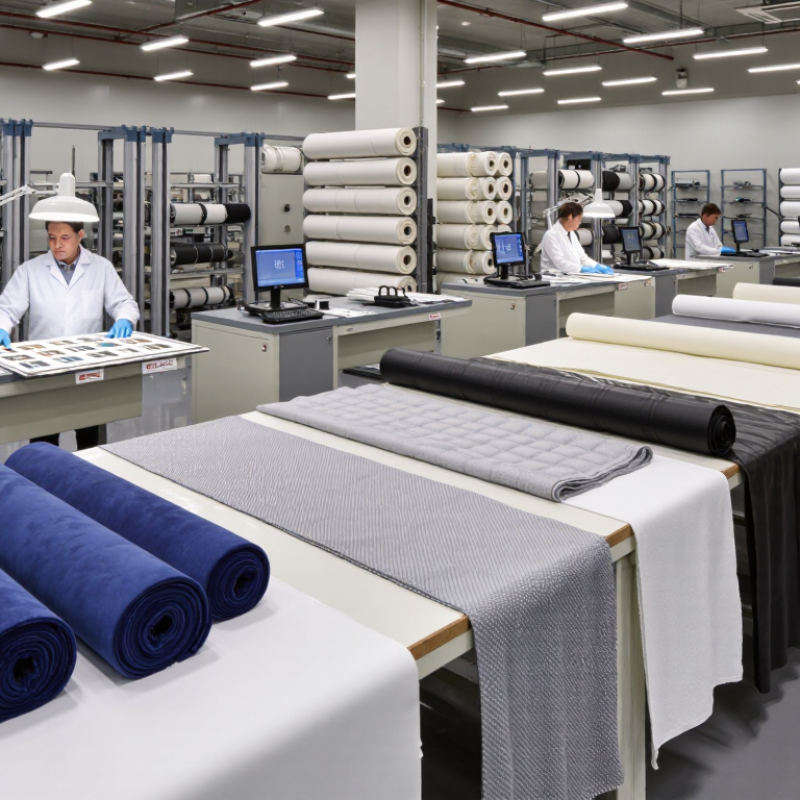
Supplier experience also shows through the factory floor. Look for clean inspection tables, labeled rolls, calibrated testing equipment, and workers checking pattern alignment under consistent light. Certifications can support confidence, but they should be verified against the actual factory and product scope. No supplier profile is flawless. Communication delays, shade variation, and minimum-order restrictions still appear in real projects. Treat them as sourcing risks, not automatic failures.
The strongest China-based suppliers combine technical control with honest communication. They clarify what can be achieved before promising it. For global buyers, this approach reduces rework, protects brand consistency, and supports dependable Embossed Fabric purchasing across seasonal collections.
Embossed Fabric Market Overview: 60–300 GSM and Key Global Applications
Embossed fabric combines texture with functional surface design. Its raised patterns may improve visual depth, softness, or grip. The 60–120 GSM range suits lightweight scarves, linings, fashion panels, and disposable-style textile applications. These fabrics fold easily and dry quickly, but deep embossing can reduce tear resistance.
Medium weights from 150–220 GSM offer a practical balance. They appear in shirts, cushion covers, bedding accents, curtains, and promotional textiles. The 240–300 GSM range provides more body for upholstery panels, bags, mattress surfaces, and durable home furnishings. It feels substantial. Still, GSM alone cannot predict performance. Fiber content, embossing depth, stretch recovery, and finishing chemistry also influence results.
Global buyers should request production samples before approving bulk orders. A sample should show pattern clarity after washing, rubbing, folding, and controlled heat exposure. Suppliers should provide GSM tolerance, fiber composition, width, shrinkage data, and colorfastness records. In practical sourcing, small differences matter; a two-millimeter pattern shift can affect panel matching. Embossing may also flatten during shipping or repeated cleaning, especially on softer constructions. This is easy to overlook. An honest specification should describe that risk instead of promising permanent texture. Independent laboratory checks add reliability, while traceable batch records help explain unexpected shade or handle changes. Supplier evaluation works better when technical evidence supports attractive photographs.
China Top Embossed Fabric Suppliers for Global Buyers - Embossed Fabric Market Overview: 60–300 GSM and Key Global Applications
This reference table summarizes commonly specified embossed fabric constructions, weight ranges, performance considerations, and international applications. Actual specifications depend on fiber content, fabric structure, embossing pattern, finishing process, and buyer requirements.
| Fabric Weight | Typical Base Fabric | Common Embossing Characteristics | Key Global Applications | Buyer Specification Priorities | Relevant Test References |
|---|---|---|---|---|---|
| 60–90 GSM | Lightweight polyester, nylon, polypropylene, or blended nonwoven fabric | Fine geometric, dotted, linear, or shallow raised patterns; designed to retain light drape and flexibility | Apparel linings, lightweight fashion accessories, packaging inserts, disposable or single-use product components, and decorative textiles | Low weight variation, surface uniformity, tear resistance, color consistency, and roll winding quality | ISO 3801 or ASTM D3776 for mass per unit area; ISO 13934-1 for tensile strength; ISO 12947 for abrasion resistance |
| 90–130 GSM | Polyester, cotton-polyester, viscose blends, and lightweight knitted or woven constructions | Visible texture with moderate relief; suitable for repeating patterns without substantially increasing fabric stiffness | Blouses, dresses, scarves, decorative linings, home-textile panels, promotional textiles, and lightweight bags | Pattern registration, hand feel, dimensional stability after washing, pilling resistance, and shade matching | ISO 6330 for domestic washing procedures; ISO 5077 for dimensional change; ISO 12945-2 for pilling |
| 130–180 GSM | Polyester, cotton, rayon, microfiber, and blended woven or knitted fabric | Medium-depth embossing with stronger visual definition; can provide a structured hand and enhanced decorative appeal | Shirts, skirts, upholstery accents, cushion covers, curtains, table textiles, and retail display fabrics | Embossing depth, recovery after compression, seam performance, colorfastness, shrinkage, and abrasion resistance | ISO 105-C06 for colorfastness to domestic washing; ISO 105-X12 for rubbing; ISO 12947 for abrasion |
| 180–220 GSM | Medium-weight polyester, cotton-rich blends, microfiber, and durable knitted fabrics | Deeper raised or quilted-style visual effects; generally offers more body and better shape retention | Home furnishing fabrics, furniture accent panels, decorative wall textiles, bags, workwear details, and soft accessories | Resistance to crushing, tensile and seam strength, edge fraying, clean pattern definition, and long-term surface wear | ISO 13934-1 for tensile strength; ISO 13935-2 for seam strength; ISO 12947 for Martindale abrasion testing |
| 220–260 GSM | Heavy polyester, cotton-polyester blends, jacquard-support fabrics, and dense knitted constructions | Pronounced embossing with a more substantial handle; often selected where visual texture and durability are both required | Upholstery, sofa and chair accents, premium curtains, travel bags, footwear components, and durable household products | High abrasion resistance, dimensional stability, colorfastness to light, coating compatibility, and cutting performance | ISO 12947 for abrasion; ISO 105-B02 for colorfastness to artificial light; ISO 5077 for dimensional change |
| 260–300 GSM | Heavy woven or knitted polyester, cotton-rich blends, microfiber, and selected technical textile constructions | Deep relief, strong structure, and enhanced covering power; requires careful control of heat, pressure, and dwell time | Heavy upholstery, protective covers, structured bags, footwear panels, automotive interior accents, and premium home textiles | Pattern durability, compression recovery, tear strength, seam slippage, flame-performance requirements, and roll weight | ISO 13937-2 for tear strength; ISO 13936-2 for seam slippage; applicable regional flammability standards where required |
| Cross-Range | Polyester, nylon, cotton, viscose, polypropylene, microfiber, and mixed-fiber substrates | Roller embossing, heat embossing, calendar embossing, or bonded raised-surface effects; pattern choice affects hand feel and durability | Fashion, home textiles, upholstery, bags, footwear, automotive interiors, packaging, hospitality textiles, and decorative applications | Fiber composition, finished width, GSM tolerance, usable width, repeat size, minimum order quantity, sample approval, and inspection method | ISO 1833 for quantitative fiber analysis; ISO 3759 for specimen preparation; ISO 2859-1 for sampling inspection |
Global sourcing note: Buyers should confirm the fiber composition, finished width, GSM tolerance, embossing repeat, color standard, roll length, packaging method, compliance documentation, and pre-shipment inspection criteria before placing a bulk order. Embossing may alter thickness, stretch, recovery, and dimensional stability, so final-product testing is recommended.