

Blog
Blog
Blog
10 Tips for Sourcing Fragrance Diffuser Sticks
Sourcing a reliable Fragrance Diffuser Stick requires more than choosing attractive reeds and pleasant scents. The right product must balance absorption, diffusion speed, durability, safety, and visual appeal. A stick that looks elegant but releases fragrance unevenly can disappoint customers within days.
Chandler Burr, a respected fragrance critic and curator, once described perfume as “liquid emotion.” That idea matters here. A diffuser stick transforms fragrance into a quiet, continuous experience across a room. Suppliers should therefore evaluate the full product system, not only the scent formula. Check reed material, fiber consistency, moisture resistance, and compatibility with the diffuser base. Small details matter. Diameter affects performance. Length changes the visual balance. Packaging influences perceived value.
This guide presents 10 practical tips for sourcing a Fragrance Diffuser Stick from dependable manufacturers. It considers sample testing, minimum order quantities, customization, production controls, documentation, and shipping protection. Ask for test records, but do not trust paperwork alone. Place samples in real rooms. Observe the first hour, the third day, and the second week.
Some results may surprise you. A stronger scent is not always better. Natural-looking rattan may perform less consistently than engineered fiber. Even experienced buyers can overlook evaporation differences between climates. That is why careful comparison remains essential. A thoughtful sourcing process reduces waste, protects brand reputation, and creates a more dependable customer experience. Perfect sourcing is unlikely. Better decisions are achievable.
Understanding Fragrance Diffuser Stick Materials and Designs
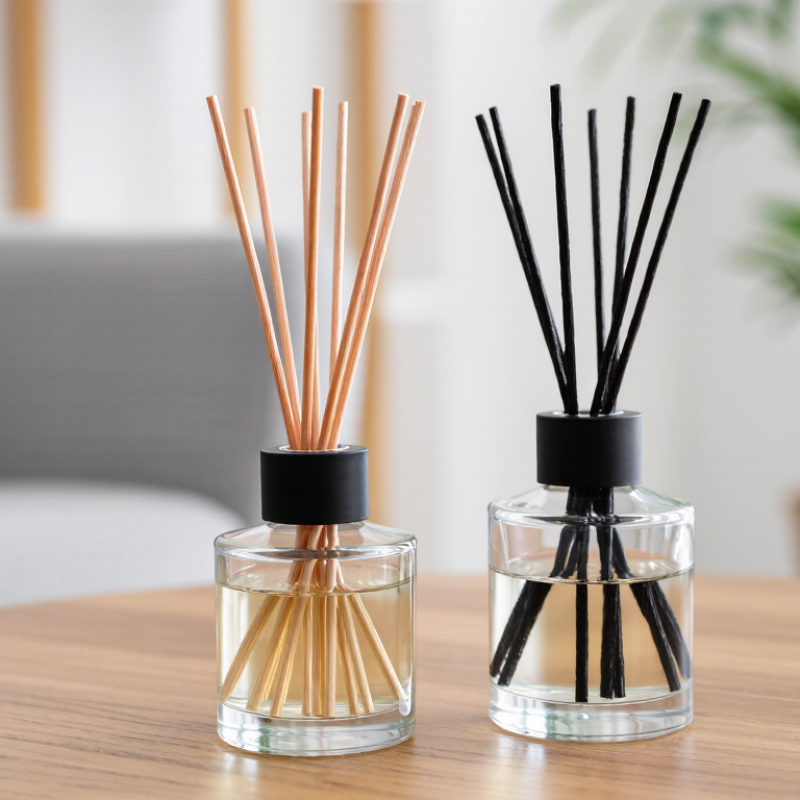
Fragrance diffuser sticks are not interchangeable. Their material and shape affect how quickly fragrance travels from the bottle into a room. Natural rattan has visible channels that can draw liquid upward, but channel size varies between sticks. That variation may create uneven scent strength in one batch. Inspect several samples, not just one.
Fiber sticks often offer more consistent pore structure and clean, uniform coloring. They can suit repeat orders where appearance matters. Ask suppliers for samples made to your intended length and diameter. Test them in the actual diffuser base and fragrance blend; performance can change with liquid viscosity. A quick water test is not enough. It tells you little about real use.
Design details deserve close attention. Thicker sticks may absorb more liquid, yet they can slow visible travel or crowd a narrow bottle neck. Thin sticks can look elegant but may need more pieces to produce the desired scent level. Check for frayed ends, surface dust, and bends after storage. Small defects matter. Still, appearance alone is a poor guide: a smooth stick may release fragrance weakly. Record the number of sticks, room size, and scent strength during a trial, then repeat it after a few days. Results may be imperfect, especially when room airflow changes, but that is useful information before placing a large order.
Defining Product Requirements, Fragrance Compatibility, and Safety Standards
Before sourcing fragrance diffuser sticks, define the product they must serve.
Record the bottle opening, neck depth, liquid volume, and expected use period. Measure the opening with calipers; a few millimeters can affect fit and evaporation. Specify stick length, diameter, material, color, and acceptable variation between batches. Keep a sample for comparison. It helps. But written tolerances matter more than memory.
Fragrance compatibility needs testing, not guesswork. Ask suppliers for material details and test sticks in the actual fragrance base. Check whether scent travels evenly after several days, and note changes in color, stiffness, or odor. Test more than one batch if possible.
Results can differ. Set clear acceptance criteria, such as consistent dimensions and no visible residue around the bottle neck.
Safety deserves equal attention: request relevant material safety documentation, confirm handling guidance for the finished liquid, and assess whether sticks shed fibers or splinter during normal use. Keep testing records with dates, batch references, and observations. A rushed test may miss slow changes, and that is an easy mistake to make.
Evaluating Suppliers, Manufacturing Quality, and Customization Options
A reliable diffuser-stick supplier should show more than polished samples. Ask for the reed species, pore consistency, drying method, and batch inspection records. Then test sticks in the actual bottle and fragrance base: a reed that draws well in water may perform differently in a viscous oil. Compare capillary rise, scent throw, and evaporation over several days. Small differences matter.
Manufacturing quality needs measurable checks. Request documented controls for diameter, straightness, moisture, and cleanliness, plus a sample from a routine production run. ISO’s 2022 Survey reported more than 1.2 million valid ISO 9001 certificates worldwide, but certification alone does not prove a supplier controls reed performance. Review the scope and records. Also ask how defects are tracked and corrected. A spreadsheet is useful, but it can still miss a weak batch.
Customization can cover length, color, packaging, and private-label printing, yet changes may affect cost and lead time. Deloitte’s 2015 consumer-product study found that one in five consumers would pay a 20% premium for personalized products; treat this as a signal, not a forecast for diffuser buyers. Ask suppliers to quote minimum order quantities and tooling charges separately. Approve a physical pre-production sample, not just a digital image. I learned that the hard way. A colored coating can look elegant while slowing scent diffusion, so test appearance and function together.
10 Tips for Sourcing Fragrance Diffuser Sticks - Evaluating Suppliers, Manufacturing Quality, and Customization Options
| Tip | Evaluation Area | What to Check | Useful Evidence or Test | Customization Question |
|---|---|---|---|---|
| 1 | Supplier experience | Confirm experience producing diffuser reeds or sticks at a scale similar to your order, and ask how production capacity is managed during peak periods. | Request a documented production workflow, sample records, and a written quotation showing minimum order quantity and estimated lead time. | Can the supplier provide several stick lengths or materials within the same production program? |
| 2 | Material selection | Compare natural rattan with engineered fiber. Rattan has natural pores that can support liquid movement; fiber sticks offer more consistent dimensions but their performance depends on fiber construction and formulation. | Test samples in the intended diffuser base and fragrance. Compare liquid uptake, scent release, appearance, and performance over time. | Which materials, colors, cross-sections, and finishes are available, and are material changes subject to a new sample approval? |
| 3 | Dimensions and tolerances | Specify stick length, diameter or width, straightness, and cut-end condition. Match stick length to the vessel height and packaging dimensions. | Ask for a dimensional specification and inspect a measured sample set. Agree acceptable tolerances before approving production. | Can the supplier cut to a custom length or produce round, flat, or other specified profiles? |
| 4 | Batch consistency | Check for variation in color, thickness, surface condition, and performance between sticks and production lots. Natural materials may show more visual variation than manufactured fiber. | Review the supplier's incoming-material and in-process inspection records; request samples from more than one lot when feasible. | What variation is considered acceptable, and how are nonconforming lots identified and handled? |
| 5 | Moisture and storage | Ask how sticks are dried, protected from moisture, and stored before packing. Damp or poorly stored materials may be more susceptible to quality issues during transit and storage. | Request storage and packaging specifications, plus any moisture-control checks used for the selected material. | Can sticks be supplied in moisture-resistant inner packaging suited to your shipping route and warehouse conditions? |
| 6 | Performance testing | Evaluate the sticks with the actual fragrance and diffuser base. Uptake and scent diffusion can change with the liquid formulation, stick material, vessel opening, and room conditions. | Run a controlled comparison using the same liquid volume, vessel, number of sticks, and test environment. Record observations at agreed intervals. | Can the supplier provide samples in multiple diameters or materials for a side-by-side formula test? |
| 7 | Quality control | Check for a documented inspection plan covering appearance, dimensions, packing quantity, and defects such as splinters, severe bends, or damaged ends. | Agree acceptance criteria in writing and request a pre-shipment inspection report or representative production samples. | Can inspection records be linked to a lot number for traceability and follow-up? |
| 8 | Packaging and transport | Check whether sticks are protected from bending, breakage, dust, and moisture during storage and transit. Confirm that pack counts and carton dimensions suit your assembly process. | Request packaging samples and verify packed dimensions, quantity per pack, and carton markings before placing a production order. | Are individual sleeves, bundles, custom counts, or retail-ready packaging available? |
| 9 | Compliance and documentation | Identify documentation required for the destination market and product configuration. Requirements can differ by country and may apply to the finished product, its ingredients, or its packaging rather than the sticks alone. | Request material declarations and relevant test reports where applicable; confirm documentation needs with your regulatory specialist or importer. | Can the supplier provide material-origin information and supporting documents for your target markets? |
| 10 | Sampling, pricing, and change control | Compare total landed cost, including samples, tooling if applicable, packaging, freight, and any order minimums. Confirm how revisions to material or specifications are approved. | Obtain a written quotation with price breaks, sample charges, payment terms, estimated lead time, and a clear specification revision process. | What are the options for custom color, logo-free packaging, special lengths, and repeat orders to the approved sample? |
Note: Performance and regulatory requirements depend on the diffuser formulation, product design, and destination market. Confirm specifications using production-representative samples and applicable local requirements.
Comparing Prices, Minimum Orders, Samples, and Production Timelines
10 Tips for Sourcing Fragrance Diffuser Sticks
A practical sourcing review should compare landed cost, not only the quoted unit price. Grand View Research estimated the global home fragrance market at over USD 13 billion in 2023. That scale creates wider supplier choices, but also uneven quality. Ask for prices at 500, 5,000, and 20,000 pieces. Confirm whether cutting, packaging, printing, and freight are included. A low quote can hide expensive finishing charges.
Tip: Request samples from at least three factories. Test liquid absorption, scent throw, color stability, and fiber shedding for seven days. Do not judge performance after one hour. Sample fees are often refundable after a confirmed order, but this must be written into the quotation. Minimum orders may range from 1,000 to 10,000 pieces, depending on material and packaging. Smaller orders cost more per unit. That is not always a problem.
Production timing deserves equal attention. Request separate dates for sample preparation, tooling, production, inspection, and shipping. A realistic schedule may require four to eight weeks after approval. The 2024 Fragrance Industry Outlook from Circana reported continued consumer interest in home scent products, which can increase seasonal factory pressure. Build a buffer of two weeks. I once underestimated carton testing. The shipment looked ready, but moisture weakened the outer boxes. Ask for batch records, material specifications, and compliance documentation aligned with current IFRA Standards. Reliable suppliers answer clearly, even when the answer is inconvenient.
10 Tips for Sourcing Fragrance Diffuser Sticks
Compare typical supplier-quote benchmarks for price, minimum order quantity, sample preparation, and production timelines. Values are based on standard 20–25 cm diffuser sticks and should be confirmed with each supplier.
Fiber reeds generally require a higher purchase price but offer shorter production schedules and lower minimum orders. Bamboo and rattan are more economical at scale, while recycled PET typically has the longest sample and production timelines because of material processing and customization requirements.
| Material | Price / 1,000 Sticks | Typical MOQ | Sample Lead Time | Production Lead Time |
|---|---|---|---|---|
| Bamboo | $18 | 10,000 pieces | 5 days | 25 days |
| Natural Rattan | $24 | 5,000 pieces | 7 days | 30 days |
| Fiber Reeds | $32 | 3,000 pieces | 10 days | 35 days |
| Recycled PET | $45 | 2,000 pieces | 12 days | 40 days |
Inspecting Orders, Managing Logistics, and Building Supplier Relationships
A reliable diffuser-stick order begins with a physical inspection, not a spreadsheet. I check length, diameter, straightness, color, and surface texture against the approved sample. The sticks should feel dry and clean. They must not release a dusty smell when opened. I also count cartons randomly, rather than trusting the outer label. Ten cartons checked from different pallets can reveal repeated packing errors. Photos, measurements, and moisture readings should enter the inspection record.
Logistics needs the same attention. Confirm carton dimensions before booking transport, because small changes can increase freight costs. Ask for the packing list, production date, carton count, and loading photos. Build a reasonable time buffer for port delays or seasonal congestion. A rushed shipment creates pressure at every stage. I prefer staged updates: production completed, inspection passed, cargo loaded, and documents released. This makes missing information easier to trace.
Supplier relationships improve when communication stays specific and fair. Share defect examples with clear photos, instead of sending emotional complaints. Discuss replacement terms before production begins. Review delivery accuracy, inspection results, and response time after each order. One supplier once passed every visual check but used cartons that weakened in humid storage. We corrected the packaging later, but the delay was avoidable. My checklist still missed warehouse conditions. That mistake changed our process. Good sourcing requires trust, but trust should remain measurable.