

Blog
Blog
Blog
10 Tips for Buying Cardboard Sheets in Bulk?
Buying Cardboard Sheets in bulk can reduce unit costs, but only when the material matches your actual packaging needs. A low quote may hide trimming waste, storage fees, weak edges, or inconsistent thickness. Before ordering, buyers should examine grade, flute profile, sheet dimensions, moisture resistance, stacking strength, and delivery terms.
Packaging specialist Dr. Susan Selke often emphasizes that packaging decisions must balance performance, cost, and environmental impact. That principle matters here. A sheet that bends beside a damp warehouse door may fail long before it reaches the customer. Small details count.
Measure twice. Order once.
This guide presents ten practical tips for comparing suppliers and controlling bulk-purchase risks. You will see how to request meaningful samples, verify caliper measurements, compare quoted weights, and calculate usable-sheet costs. It also covers pallet protection, minimum order quantities, lead times, and storage conditions. These points sound basic, yet rushed purchases often overlook them.
Your product may need rigid protection, clean presentation, or easy die-cutting. Cardboard Sheets are not interchangeable. A heavy board can protect fragile goods, but it may increase freight costs. A cheaper grade may look acceptable during inspection, then crush under stacked cartons. I have seen buyers focus too heavily on price and regret ignoring moisture exposure. That judgment deserves reconsideration.
Use supplier documentation, test samples in realistic conditions, and record every specification. Reliable purchasing is not about finding the lowest number. It is about finding predictable performance at a defensible total cost.
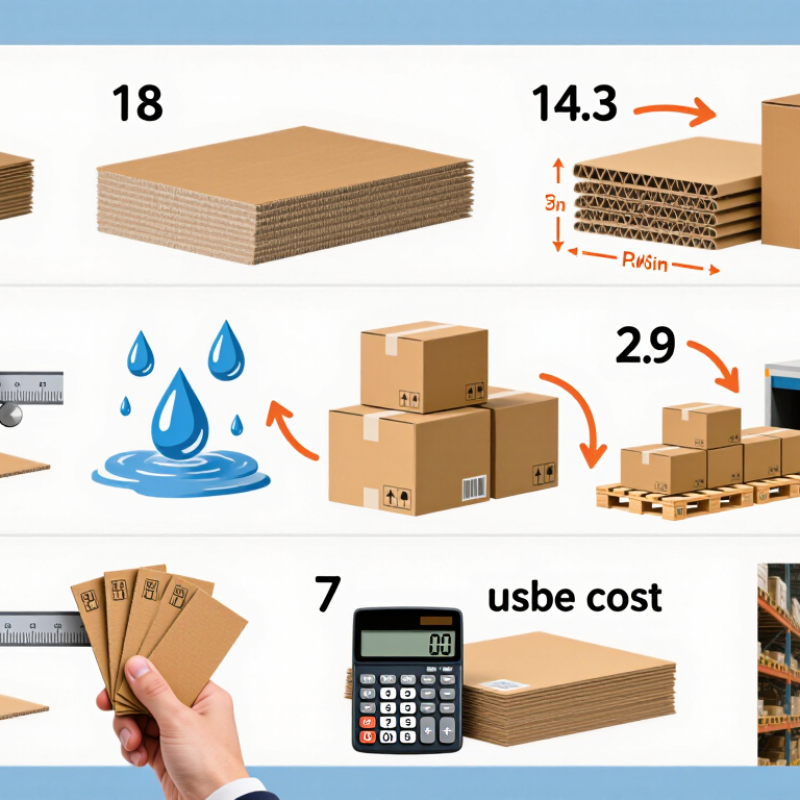
Define Your Cardboard Sheet Requirements and Intended Use
Before requesting bulk quotes, define what the cardboard sheets must do. A packaging sheet needs different specifications from a furniture protector or warehouse divider. Record the finished length, width, thickness, basis weight, flute profile, and required edge strength. Also note whether sheets will face stacking, vibration, moisture, or repeated handling.
Small details matter. A 600 × 400 mm sheet may fit one carton but waste space in another. Measure the actual product, including corners and protective wrapping. For heavier loads, request an Edge Crush Test value, tested under ISO 3037 procedures. Smithers’ Future of Corrugated Packaging to 2028 report estimates the global corrugated packaging market reached about $205.7 billion in 2023. That scale shows why standardized specifications matter across large supply chains.
Define the intended use in plain language. “Protect metal parts during shipment” is incomplete. State the part weight, stacking height, transit duration, and storage conditions. I once focused too heavily on thickness and overlooked humidity exposure. The sheets looked strong in a dry warehouse, then softened near an open loading area. The International Organization for Standardization identifies moisture resistance, compression performance, and dimensional consistency as important packaging considerations. Ask for samples and test them in realistic conditions. A perfect specification sheet can still miss a messy warehouse.
Define Your Cardboard Sheet Requirements and Intended Use
| Requirement | Questions to Define | Example Specification | Why It Matters |
|---|---|---|---|
| Intended use | Will sheets separate products, protect surfaces, or support a load? | Layer pads between stacked cartons; flat panels to protect furniture during transport; inserts cut to fit a package. | The application determines the board construction, dimensions, and strength needed. |
| Sheet dimensions | What finished length and width are required? Are sheets placed inside packaging or used as a cover? | A layer pad for a 600 × 400 mm carton footprint could be specified at 600 × 400 mm, subject to fit and handling needs. | Accurate sizing reduces trimming, waste, and problems during packing. |
| Board construction | Do you need solid paperboard or corrugated board? If corrugated, is single-wall or double-wall suitable? | Single-wall corrugated for general separation and protection; double-wall corrugated when greater stiffness or cushioning is needed. | Construction affects stiffness, cushioning, sheet weight, and storage volume. |
| Flute and thickness | Is a thinner, flatter sheet preferred, or is added cushioning more important? | Typical approximate profiles: E-flute around 1.5 mm, B-flute around 3 mm, and C-flute around 4 mm. Actual thickness varies by board specification. | Flute choice affects sheet thickness, surface flatness, and protective performance. |
| Strength requirement | What weight will the sheet support, and will it be stacked, bent, or handled repeatedly? | For load-bearing or pallet applications, specify the required performance test and value, such as edge crush test (ECT), rather than relying on thickness alone. | Board strength depends on materials and construction as well as thickness. |
| Surface and cleanliness | Will the sheet touch a finished, polished, or easily scratched product? | Request a clean, flat liner surface and state whether scuffs, dust, or recycled-fiber marks are acceptable. | Surface condition can affect appearance and the risk of marking the goods. |
| Moisture exposure | Will sheets be stored or used in humid conditions, or exposed to water? | For dry indoor storage, standard board may be appropriate. For damp conditions, discuss moisture-resistant options and test requirements with the supplier. | Paper-based board can lose strength when it absorbs moisture. |
| Cutting and converting | Will sheets be used as delivered, or cut, scored, slotted, or die-cut? | Provide finished dimensions and any cut or score locations; confirm whether tolerances are needed for automated packing equipment. | Clear converting details help ensure parts fit and run consistently. |
| Order quantity | How many sheets are needed per order and per month? How many can be stored safely? | State the required sheet count, delivery frequency, and preferred stack or pallet quantity; confirm minimum order quantity before placing an order. | Bulk pricing should be weighed against storage capacity, handling, and usage rate. |
| Packaging and delivery | How should stacks be protected, labelled, and delivered? | Specify stack height or sheet count per bundle, protection from rain and dirt, delivery location, and unloading arrangements. | Packaging and delivery details affect damage risk and receiving efficiency. |
Note: Flute thicknesses are approximate and can vary by supplier and board grade. Confirm dimensions, tolerances, and performance values against the final product specification.
Compare Cardboard Grades, Thicknesses, Sizes, and Strength
Buying cardboard sheets in bulk requires more than choosing the lowest price. Grade, thickness, size, and strength must match the actual job. Kraft liner usually offers better tear resistance, while recycled liner can reduce cost and environmental impact. A useful admission: no grade wins every test.
Thickness is often measured by caliper or GSM, but thicker does not always mean stronger. Flute structure, liner quality, moisture, and stacking direction also matter. For shipping cartons, compare Edge Crush Test (ECT) ratings and burst strength. ASTM D4727 and TAPPI T 811 provide recognized testing references. Fibre Box Association statistics reported approximately 384 billion square feet of U.S. corrugated shipments in 2023, down about 11% year over year. This slowdown may encourage aggressive pricing, but weak material still creates waste.
Measure the largest product, smallest product, and required cushioning space before ordering. Oversized sheets may increase cutting waste. Undersized sheets create seams and exposed edges.
Store samples for one week in your normal warehouse conditions, especially where humidity changes.
Smithers’ 2024 corrugated packaging report continues to identify e-commerce and protective packaging as major growth areas. That suggests consistent compression performance matters more than appearance. I still see buyers selecting one thickness for every application. It seems efficient, but testing three grades on real loads is usually safer. Ask suppliers for test reports, moisture resistance data, and production tolerances before committing to a full pallet.
Evaluate Suppliers, Product Quality, and Bulk Pricing
When buying cardboard sheets in bulk, supplier evaluation should start with evidence, not a low quotation. Request mill certificates, recycled-fiber percentages, sheet dimensions, flute or board grade, moisture limits, and recent quality records. A dependable supplier should provide samples from the same production line. Check edge crush strength, burst strength, caliper, and flatness. One impressive sample proves little.
Industry data supports careful planning. Smithers’ 2024 report, The Future of Corrugated Packaging to 2029, identifies continued growth in corrugated packaging demand, driven by e-commerce and transport protection. More volume can improve pricing, but only when specifications remain stable. Ask for prices at several quantities, such as 500, 2,000, and 10,000 sheets. Separate the sheet price from tooling, pallet charges, delivery, storage, and moisture-protection fees. The cheapest quote may not be cheapest delivered.
I also compare lead times, replacement policies, inspection methods, and payment terms. Ten practical checks can prevent expensive surprises: supplier history, factory location, capacity, certifications, sample consistency, compression results, packaging, freight, delivery records, and claim handling. Keep a written specification with tolerances. Small differences matter. A two-millimeter size variation can disrupt automated packing. I have seen buyers overestimate savings by ignoring storage space and damaged corners. That mistake is easy to repeat. Recheck the forecast before committing to a full truckload.
Check Minimum Orders, Shipping Costs, and Storage Needs
10 Tips for Buying Cardboard Sheets in Bulk?
Buying cardboard sheets in bulk can lower unit costs, but the advertised price rarely tells the whole story. Start by checking the minimum order quantity (MOQ). A low price may require several hundred sheets. That volume can exceed your monthly packing needs and tie up cash. Ask whether mixed sizes are allowed, and confirm thickness, flute type, dimensions, and moisture tolerance in writing. I once underestimated sheet usage because damaged edges were not included in my calculation. That mistake made the bulk saving less impressive.
Shipping deserves its own calculation. Request a freight estimate before approving the order. Large, flat bundles consume space, even when their weight seems modest. Compare delivery charges, lift-gate fees, residential surcharges, and possible pallet deposits. Ask how the sheets will be wrapped, stacked, and protected from rain. A cheap shipment is not cheap if corners arrive bent. Leave room for timing errors. Seasonal demand and loading delays can disrupt a packing schedule.
Storage needs can quietly erase the savings. Measure a dry, level area before ordering, including aisle space for safe handling. Keep cardboard off concrete and away from leaking pipes, heaters, and direct sunlight. Use the oldest sheets first, but inspect them for warping or soft spots. If storage is tight, smaller repeat orders may be wiser than one large delivery. That choice costs more per sheet, perhaps, yet reduces waste and workplace clutter. A simple spreadsheet should include purchase, freight, damaged units, storage space, and labor. It will not predict everything. But it can expose assumptions before they become expensive.
Confirm Customization Options, Sustainability, and Purchase Terms
10 Tips for Buying Cardboard Sheets in Bulk?
Confirm Customization Options, Sustainability, and Purchase Terms
Bulk cardboard purchasing starts with a precise specification, not a low quoted price. Confirm sheet length, width, thickness, flute profile, edge tolerance, and load requirements. Ask whether the supplier supports custom cutting, printing, moisture resistance, or special stacking formats. Request physical samples before approving production. A sample can reveal warping, weak edges, or rough surfaces that photos hide. Small details matter.
Sustainability claims need evidence. Check the percentage of recycled fiber and ask how that figure is verified. Request documentation for sourcing, recyclability, and responsible forestry practices where relevant. Also consider the full shipping distance and packaging waste. Recycled sheets may perform differently in humid storage. That trade-off deserves testing. “Eco-friendly” is too vague.
Read the purchase terms carefully. Confirm minimum order quantities, production lead times, delivery responsibilities, payment stages, and inspection procedures. Include a written tolerance for size and thickness. Define what happens when sheets arrive damaged or below specification. Plan storage before ordering; cardboard can absorb moisture quickly. I once underestimated warehouse humidity, and part of a shipment became unusable. That mistake was avoidable. Leave room for realistic delays, too. The cheapest offer may become expensive after rework, rejected loads, or urgent replacement freight.
10 Tips for Buying Cardboard Sheets in Bulk
Confirm the board grade, flute profile, sheet dimensions, customization options, sustainability documentation, minimum order quantity, lead time, shipping terms, quality tolerances, and replacement policy before placing a bulk order.
Chart insight: Corrugated flute height affects cushioning, stacking strength, sheet thickness, and storage requirements. The values shown are commonly published nominal flute profiles; actual dimensions can vary by converting process and supplier specification.
Purchase checklist: Request a sample, approve the exact dimensions and print or die-cut requirements, verify recycled-content and recyclability claims, clarify payment and delivery terms, and confirm how damaged or out-of-specification sheets will be handled.