How to Choose the Best Clear Glass Jar for Your Product?
Choosing the right Clear Glass Jar is not just a matter of appearance. It affects product protection, shelf presence, filling efficiency, and the customer’s first impression. A jar that looks elegant under studio lights may feel awkward in the hand or prove difficult to label. Small details matter: the curve of the shoulder, the weight of the base, and whether the closure sits evenly on the rim.
Before comparing styles, define what the jar must do. Consider the product’s texture, fill volume, dispensing needs, and exposure to light. Then check the opening, glass thickness, usable interior space, and compatibility with the intended closure. Ask suppliers for samples. Fill one, apply the label, and handle it as a customer would. A few minutes of testing can reveal a slippery grip or a lid that feels too loose. Not every attractive option performs well.
Packaging specialist [insert a verified expert’s name] offers a practical reminder: “Choose the jar for the product’s real use, not the photograph.” Treat that as a sourcing principle, not a substitute for testing. Compare samples under ordinary lighting, inspect the finish, and confirm dimensions against your filling and storage setup. The best Clear Glass Jar balances appearance with dependable function. Sometimes the first choice is wrong. That is useful to discover early, before design decisions become harder to change.
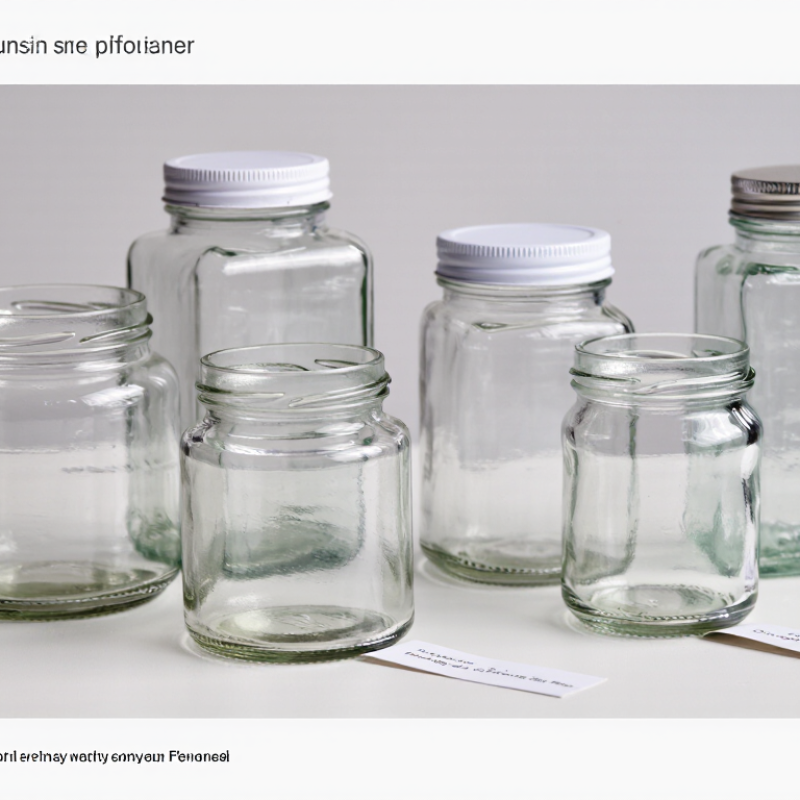
Identify Your Product’s Storage and Display Requirements
Choose a jar around the product’s real storage needs, not just its shelf appeal. Light matters. Clear glass shows color and texture, but can expose light-sensitive contents. Test the product under the lighting used in stores and during typical storage. Check the jar’s opening against the product’s texture: a narrow neck may suit pourable contents, while a wide mouth makes scooping easier. Measure the shelf footprint, filled weight, and headspace, too. A jar that looks elegant empty can become awkward to handle when full.
Display requirements deserve equal attention. Look for a smooth label panel, a stable base, and a closure that fits how customers will use the product. The 2023 Global Buying Green Report found that 82% of surveyed consumers were willing to pay more for sustainable packaging. That finding signals interest, not a guarantee of purchase. Glass may support reuse, but its weight and breakage risk matter in shipping and daily handling. Measure twice. I would test filled samples on the actual shelf and through the intended packing process before approving a design. A small trial may reveal a problem the mock-up missed.
Match Jar Capacity and Shape to the Product
Choose capacity from the amount customers will actually use, not the jar’s brimful volume. A 250 mL product may need headspace for a spoon, settling, or easy pouring. Test with the real product: fine powder can compact, while larger pieces leave uneven gaps. A mock-up can look right on a desk and still feel awkward in a customer’s hand.
Match the opening and body shape to how the product is accessed. A wide mouth suits products scooped by hand or utensil; a narrower opening can help control pouring. Check the jar with the product inside, too. A tall, slim jar saves shelf width, but may be less stable when full. A squat jar offers a broader base and easier access, though it takes more shelf space. There is no perfect silhouette for every product.
Consider transport and end-of-life alongside shelf appeal. The U.S. EPA’s 2018 Advancing Sustainable Materials Management report estimated that 3.1 million tons of glass containers and packaging were generated, and 33.1% was recycled. This is a U.S. figure, not a universal rate, but it is a useful reminder to review the whole package. Compare filled jars for weight, storage fit, and handling before choosing a capacity or shape; small differences become noticeable in a packed case.
How to Choose the Best Clear Glass Jar for Your Product? — Match Jar Capacity and Shape to the Product | Product Type | Typical Net Fill | Suggested Jar Capacity | Suitable Jar Shape | Selection Considerations |
| Jam, honey, or preserves | 200–250 g | Approximately 200–300 mL | Wide-mouth round jar | A wide opening makes filling and spooning easier. Allow space for the closure and the product’s required headspace. |
| Spices and dried herbs | 30–60 g | Approximately 100–200 mL | Small round jar with a straight-sided body | Dry ingredients vary in density, so choose capacity by testing the actual product. A straight body helps with scooping and label placement. |
| Loose-leaf tea | 40–80 g | Approximately 250–500 mL | Tall, straight-sided jar | Leaf size and packing affect volume. A taller shape uses shelf space efficiently; check that the opening accommodates the leaves. |
| Body butter or thick cream | 100–200 g | Approximately 120–250 mL | Short, wide-mouth jar | A broad opening supports easy access to dense products. Confirm compatibility between the product, glass, liner, and closure. |
| Facial cream or balm | 30–50 g | Approximately 40–75 mL | Compact, low-profile round jar | A small footprint suits limited product quantities. Select capacity using the product’s measured fill volume rather than weight alone. |
| Candles | 150–250 g of wax | Approximately 200–350 mL | Round jar with a stable, broad base | Wax density and fill level affect the required volume. Check heat suitability and test the complete candle design before sale. |
| Pickles or preserved vegetables | 300–500 g, including packing liquid | Approximately 400–700 mL | Wide-mouth cylindrical jar | The opening should fit the largest pieces. Account for both solids and brine, and use a closure and process appropriate for the food. |
| Bath salts | 250–500 g | Approximately 300–700 mL | Wide-mouth round jar | Granule size and settling change the space needed. A wide opening makes pouring and scooping more convenient. |
Evaluate Glass Clarity, Strength, and Compatibility
Clear glass lets customers inspect a product, but clarity varies. Hold a sample beside a white card under natural light. Look for a green or gray cast, bubbles, scratches, and uneven walls. These details can change how a cream, sauce, or dry ingredient appears on a shelf. Check several jars, not just one. Small differences between samples are easy to miss.
Strength depends on more than wall thickness. Inspect the base, rim, and shoulder for chips or rough seams, then test filled samples during normal handling and shipping conditions. A thicker jar may feel sturdy, yet added weight can increase freight costs. Not always better. If the jar will encounter hot filling or rapid temperature changes, ask the supplier for its rated limits and test the actual filling process. Glass can break when conditions exceed its tolerance.
Compatibility includes the product, closure, and storage environment. Confirm that the jar and lid materials suit the formula, especially when it contains acids, oils, or fragrances. Check the liner for a reliable seal, and watch for leaks, odor changes, or product discoloration during a trial period. Results from a short test may not predict long-term storage perfectly. That uncertainty deserves attention. Keep filled samples under realistic conditions and inspect them at planned intervals before choosing a production size.
Choose a Closure That Protects the Contents
A clear glass jar only protects its contents when the closure fits the jar and suits the product. Check the finish size and thread style before ordering caps; a small mismatch can cause cross-threading or a loose seal. Fit matters. The liner also matters. Its material should be compatible with the contents, especially if they are oily, acidic, or prone to absorbing odors. Ask the supplier for material details, then test the closure with the actual product rather than relying on appearance alone.
Think about how the jar will be handled. A jar stored upright on a shelf faces different conditions from one shipped in a vibrating carton. Fill a few samples, close them as intended, and check for leaks after normal handling. Do not assume a cap is airtight unless testing supports that claim. Hand-tightening can also vary more than expected, so repeat the test with consistent closing pressure.
Clear glass lets customers see color and texture, which can be useful, but it offers little protection from light. A well-fitting closure will not solve that issue. I have seen packaging choices get overcomplicated; still, the closure deserves a real trial. Check for residue around the rim, changes in the contents, and caps that loosen during storage. Small flaws show up quickly.
Compare Supplier Quality, Costs, and Compliance
How to Choose the Best Clear Glass Jar for Your Product?
A good comparison starts with samples, not a catalogue photo. Check rim finish, wall thickness, capacity, and whether lids seal consistently across several jars. Ask suppliers for product specifications, defect tolerances, and test records. Eurostat’s 2022 packaging-waste data reports that about 75% of glass packaging waste was recycled in the EU. Recyclability is useful, but only when local collection systems accept the jar and its components.
Compare the full landed cost, including freight, breakage, closures, and quality checks. A cheaper unit price can become costly when jars arrive chipped or vary in height. Request a written quote at your expected order volume. Then check food-contact declarations and relevant test reports for your destination market; requirements can differ by material and use. Keep records, and confirm that documents match the exact jar and closure being purchased. A tidy certificate is not proof if it covers another product.
Tips: Order samples from shortlisted suppliers and test them with your actual product, filling temperature, and closure. Ask for replacement terms in writing. One trade-off remains: lighter jars may reduce shipping costs, but can feel less sturdy on the shelf. Don’t assume the lightest option is best.