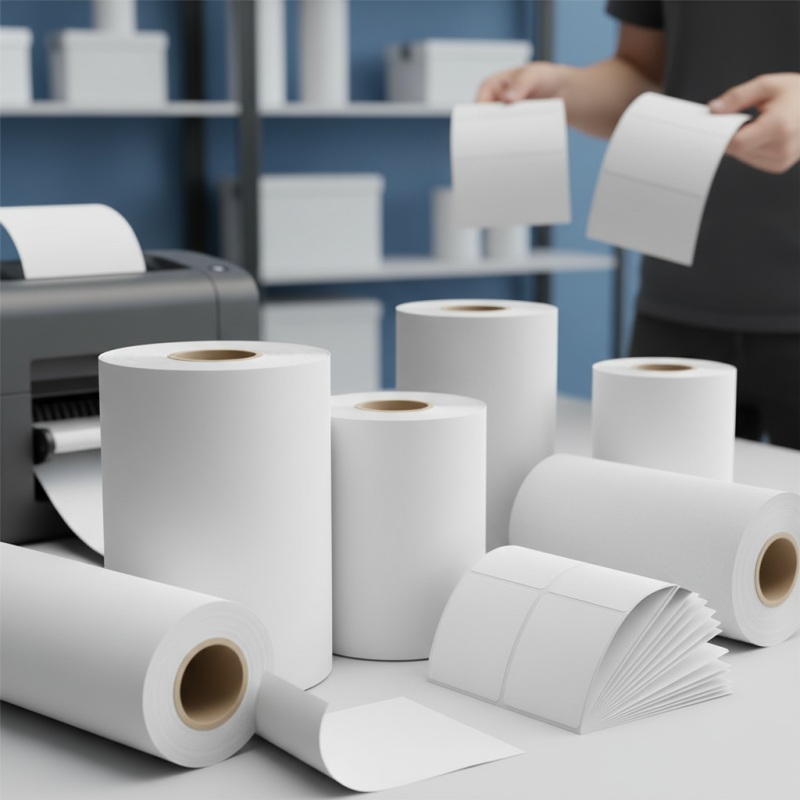
How to Choose the Best Custom Thermal Paper for Your Needs?
Choosing the right custom thermal paper can significantly impact your business operations. It’s essential to consider various factors before making a decision. The market offers a wide range of options, which can be overwhelming. Understanding your specific needs is crucial.
Custom thermal paper varies in quality, size, and application. Each type serves different purposes. For instance, some thermal paper is designed for receipts, while others are tailored for labels. Knowing what you’ll use the paper for will guide your choice. Experts recommend evaluating your printer compatibility as well.
Many people overlook the importance of durability. High-quality custom thermal paper lasts longer and provides better print clarity. However, cheaper options may lead to issues, such as fading or smudging. Reflecting on your experiences with thermal paper can reveal what truly matters to you in your selection process.
Factors to Consider When Selecting Custom Thermal Paper
Choosing the right custom thermal paper involves several important factors. The first consideration is the type of printer you are using. Different printers require specific paper sizes and types. If you are uncertain about your printer's requirements, refer to the user manual.
Another aspect to keep in mind is the paper's weight and thickness. Thicker paper can be more durable, providing longer-lasting prints. However, it may not be suitable for all printers. Ensure you balance quality and compatibility when selecting your paper.
Tip: Always request samples. Testing the paper with your printer will help you identify the best match.
Chemical sensitivity is also crucial. Thermal paper often contains coatings that react to heat. Some papers may contain BPA, a substance linked to health concerns. Choose BPA-free options whenever possible to ensure safety.
Tip: Educate yourself about the materials used. Understanding your choices helps in making informed decisions.
Incorporating these details into your selection process can streamline your experience. Be mindful of the potential trade-offs between cost and quality. Investing in better paper can lead to improved print outcomes and less waste.
Types of Custom Thermal Paper Available in the Market
When considering custom thermal paper, several types are available in the market. Each serves specific needs and preferences. Standard thermal paper is often used for receipts. It offers decent quality and is widely accessible. Premium thermal paper provides sharper prints and better durability, reducing fading over time.
Another option is water-resistant thermal paper. This is ideal for environments where moisture is a concern. The ability to withstand spills can extend the lifespan of printed materials. It's a practical choice for restaurants and outdoor events.
Tips for choosing the right thermal paper include assessing your printing volume and the environments in which it will be used. Consider whether you need fast-drying ink. For high-traffic settings, durability is key. Also, think about the print quality. A clearer print may be necessary for detailed images or text.
Selecting the right type of thermal paper can be daunting. There are so many choices, and each has its pros and cons. Sometimes it helps to sample different types before a bulk order. Trial runs can reveal which paper meets your requirements effectively. Think long-term. A slightly higher upfront cost on premium paper may save money on reprints later.
Understanding Thermal Print Quality and Longevity
When choosing custom thermal paper, print quality and longevity are key factors. Thermal printing technology relies on heat to produce images on paper. The quality of thermal paper directly impacts how well the print remains clear over time. High-quality thermal paper can produce sharp, detailed images. Yet, not all papers offer the same durability.
Longevity is crucial for documents that need to be preserved. Poor quality paper may fade quickly, especially in sunlight. Additionally, certain conditions can cause ink to smudge. Using paper that can withstand temperature fluctuations is essential. This can prevent deterioration and ensure your prints stay readable.
It’s important to consider the environment where the paper will be used. For point-of-sale systems, durability is vital. However, some businesses overlook how environmental factors affect print quality. Choosing the right thermal paper may take time, but it’s worth the effort. Testing different types can help determine which offers the best results. Quality should never be an afterthought in your selection process.
Evaluating Cost-Effectiveness of Custom Thermal Paper Options
Choosing the right custom thermal paper involves careful consideration of cost-effectiveness. The price varies greatly depending on quality, size, and printing capabilities. To make a smart decision, evaluate your specific needs. Think about the volume of receipts or tickets you print weekly. High-volume users may benefit from bulk purchasing. However, smaller businesses might find smaller packs more manageable.
Quality is just as important as price. Cheaper options may compromise print clarity and durability. Inexpensive paper can fade quickly, leading to lost information and reprints. This can ultimately result in higher long-term costs. A careful balance between cost and quality is essential to avoid recurring expenses.
It’s crucial to assess the type of equipment you use. Not all thermal papers work with every printer. Using inappropriate paper could lead to jams and inefficiencies. These issues would cause unexpected downtime and frustration. Consider the total cost of ownership, not just the upfront price. Sometimes, spending a little more upfront saves money down the road.
Cost-Effectiveness Evaluation of Custom Thermal Paper Options
Identifying Specific Use Cases for Custom Thermal Paper Needs
When choosing custom thermal paper, understanding specific use cases is crucial. Different applications require different paper types. For instance, point-of-sale systems often demand high-quality paper for printing receipts. These receipts must withstand handling and maintain legibility over time. In contrast, shipping labels may need weather-resistant paper to endure outdoor conditions.
Different industries have unique demands. Restaurants might prioritize quick printing for order tickets, while healthcare facilities may require thermal paper for patient documentation. Each scenario has implications on paper selection. You might find that the paper quality impacts customer experience. A smudged receipt can lead to confusion and frustration.
Reflect on your application’s requirements. What kind of printing speed do you need? How long should the printed material last? Ask these questions before making a decision. Unchecked, your choice could result in wasted resources. Evaluating your specific needs is essential for selecting the right thermal paper.