China Top 10 Ordinary Plywood Manufacturers
China’s plywood industry covers a wide range of factories, products, and quality levels. This guide examines the China Top 10 Ordinary Plywood Manufacturers through practical purchasing criteria. It focuses on veneer quality, core construction, bonding strength, surface finish, and production consistency. Ordinary Plywood may look simple, yet small defects can affect furniture, packaging, partitions, and interior projects.
Dr. Robert H. Falk, a forest-products researcher, has stated, “Plywood performance depends on more than appearance; veneer quality, bonding, and processing all matter.” That principle guides this comparison. Reliable manufacturers should explain their timber sources, adhesive systems, thickness tolerance, moisture control, and inspection procedures. Factory experience also matters. A clean production line, organized veneer storage, and properly calibrated pressing equipment reveal more than attractive catalog photographs.
Details matter greatly. Buyers should check panel dimensions, core gaps, warping, delamination, and formaldehyde documentation. Export history can support credibility, but it cannot replace independent inspection. Samples may appear excellent while larger shipments vary. That is a real concern. No ranking is flawless, because supplier performance can change with raw materials, equipment, and management. This introduction therefore treats the list as a research starting point, not a final verdict. Readers should compare current test reports, certifications, sample results, and written specifications before selecting a manufacturer. The strongest Ordinary Plywood supplier is not always the cheapest or the largest. It is the one that delivers stable panels, clear communication, and accountable quality control over time.
What Is Ordinary Plywood and Why China Leads Its Production
Ordinary plywood is a practical panel made from thin wood veneers. Each veneer is placed across the previous layer, creating a stable cross-grain structure. It is commonly used for furniture backs, packaging, interior partitions, shelving, and temporary construction work. “Ordinary” does not always mean poor quality. It usually describes commercial-grade plywood with visible knots, color variation, or small surface repairs.
A reliable inspection should check thickness, veneer alignment, core gaps, bonding strength, and surface flatness. A 12-millimeter panel may measure slightly less after sanding. That detail matters during installation. Interior plywood often uses urea-formaldehyde adhesive, while moisture-resistant versions need different glue systems and testing. Buyers should request emission data, product standards, and batch inspection records. Low prices alone prove very little.
China leads ordinary plywood production because its supply chain is broad and highly coordinated. Poplar, eucalyptus, and other fast-growing wood resources support large-scale veneer production. Established machinery suppliers, skilled factory labor, inland manufacturing zones, and efficient ports also reduce delivery costs. Many producers can adjust thickness, face quality, core structure, and packaging for overseas orders. However, quality can vary between batches. The term “ordinary plywood” remains somewhat vague, so careful buyers should compare samples rather than rely on catalog photos. A clean surface may still hide weak inner layers.
China Top 10 Ordinary Plywood Manufacturers: What Is Ordinary Plywood and Why China Leads Its Production
Ordinary plywood is a cross-laminated veneer panel commonly used for interior decoration, furniture, packaging, shelving and general construction applications. China has become a leading plywood production base because of its large processing capacity, extensive timber and veneer supply chains, mature manufacturing clusters, competitive labor and logistics, and strong export infrastructure.
The chart shows common commercial thickness specifications for ordinary plywood. A widely traded panel size is 1220 × 2440 mm, while actual thickness availability may vary by factory, market and application. These specifications describe product formats rather than individual companies or brands.
How China’s Top 10 Ordinary Plywood Manufacturers Are Selected
China Top 10 Ordinary Plywood Manufacturers
Selecting China’s top 10 ordinary plywood manufacturers requires more than checking sales claims. The process begins with verified factory evidence, not polished websites. FAO’s Global Forest Resources Assessment 2020 reported that forests covered about 31% of global land area. This highlights the importance of legal sourcing and traceable timber records. Supplier assessments should review factory ownership, production lines, export history, and third-party inspection documents.
Product quality receives greater weight than advertising. The FAOSTAT Forestry Production and Trade database provides useful benchmarks for plywood production and trade trends. However, national statistics do not prove one factory’s performance. Each candidate should provide recent test results for thickness tolerance, moisture content, bond strength, and formaldehyde emissions. Testing should reference relevant requirements, including ISO 12465 where applicable. Factory visits can reveal practical details, such as clean veneer storage, calibrated presses, and sealed panel edges.
Small details matter.
A reliable selection model can assign scores for quality consistency, production capacity, delivery records, raw-material traceability, and after-sales response. Independent audits and verifiable shipment records improve credibility. Yet no public ranking is flawless. Production figures may change, and some certificates cover only selected products. That limitation deserves attention. The final 10 should therefore combine documented data, sample testing, customer references, and repeated performance checks, rather than relying on one impressive audit or a single low quotation.
Profiles of China’s Top 10 Ordinary Plywood Manufacturers
China Top 10 Ordinary Plywood Manufacturers
Profiles of China’s Top 10 Ordinary Plywood Manufacturers
China’s leading ordinary plywood manufacturers serve furniture, packaging, interior, and construction markets. Their products commonly use poplar, eucalyptus, birch, or mixed hardwood veneers. The first profile represents a large producer with automated peeling lines and continuous hot pressing. Its strength lies in stable panel thickness and high-volume delivery. Another manufacturer focuses on furniture-grade panels, using tighter veneer grading and smoother sanding. Small details matter here. Uneven sanding can damage an entire batch.
A third producer specializes in moisture-resistant plywood for indoor renovation projects. It checks adhesive spread, pressing temperature, and core alignment. The fourth supplies lightweight panels for cabinets and temporary structures. Its lower density reduces transport costs, but edge strength requires careful inspection. The fifth manufacturer offers customized dimensions and packaging. This flexibility helps distributors, although frequent changes may slow production. A sixth factory emphasizes formaldehyde emission control and maintains laboratory records for each production lot.
The remaining four profiles show different advantages. One manufacturer uses thicker face veneers for improved surface appearance. Another has strong export experience and prepares documents with consistent technical data. The eighth focuses on rapid sampling, helping buyers compare cores before large orders. The ninth combines manual inspection with machine grading, which can identify hidden voids more effectively. The tenth competes through practical pricing and dependable lead times. Yet price alone is not proof of quality. Buyers should request test reports, inspect random panels, and confirm moisture content. Even experienced manufacturers may show variation between batches. A careful inspection remains necessary.
Manufacturing Processes, Materials, and Quality Standards
China Top 10 Ordinary Plywood Manufacturers
Ordinary plywood begins with suitable logs, not attractive packaging. Manufacturers commonly use poplar, eucalyptus, birch, or mixed hardwood veneers. Each species affects strength, weight, surface quality, and price.
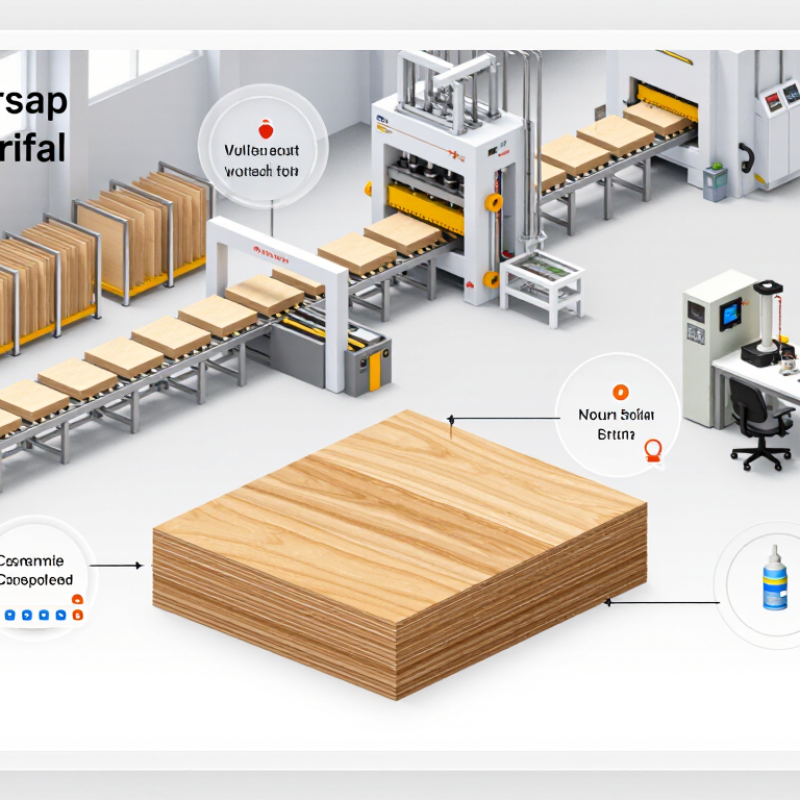
In factory inspections, log selection reveals much. Fresh, straight logs produce more consistent veneers. Rotary peeling creates thin sheets, which are then clipped, dried, graded, and repaired. Workers arrange the grain in cross-laminated layers. Phenolic or melamine-based adhesives are applied before hot pressing. Press temperature, pressure, and time must match the panel thickness. Small mistakes can cause blisters, weak bonds, or uneven thickness.
Quality control should continue after pressing. Sanding machines check surface flatness, while inspectors measure moisture, dimensions, and bonding strength. Reliable manufacturers test formaldehyde emissions and bending performance against the target market’s requirements. Common references include GB/T standards, EN 636 classifications, and E1 emission limits. Certification alone is not enough. Factory records, sample testing, and traceable batch numbers provide stronger evidence.
No production line is flawless. A hidden core gap may escape a quick visual check. This is where destructive testing matters. Cutting a sample can expose internal weakness, although it reduces saleable material. Some factories may also report averages without showing the lowest results. Buyers should question that practice. Clear inspection methods, retained samples, and honest defect records make ordinary plywood more dependable for furniture, packaging, and interior construction.