China Best Warehouse Barcode Labels Supplier?
Choosing the China Best Warehouse Barcode Labels Supplier? The decision involves more than price, printing speed, or attractive samples. Warehouse Barcode Labels must survive forklift traffic, dust, cold storage, abrasion, and repeated scanning. A label that fails on a carton can interrupt receiving, picking, and dispatch. Small errors become expensive.
Industry evidence supports a careful approach. MHI’s 2024 Annual Industry Report identifies inventory optimization, warehouse management systems, and automation as continuing investment priorities for supply-chain companies. Zebra’s Warehousing Study also shows that warehouse leaders are accelerating modernization and seeking better visibility across inventory flows. These trends increase the importance of dependable barcode identification. The label is a small component. Its operational effect is not.
A capable Chinese supplier should demonstrate practical experience with thermal-transfer ribbons, direct-thermal materials, adhesive selection, liner quality, and barcode verification. Ask for test samples using your actual carton surface, freezer temperature, humidity, and scanner distance. Request ISO-related quality records, GS1-compatible barcode guidance, batch traceability, and documented inspection procedures. A clear sample approval process matters more than confident sales language.
The best supplier may not be the cheapest.
Material specifications should match the warehouse environment. Paper labels can suit dry indoor storage, while synthetic films may perform better under moisture and abrasion. Yet even premium material can fail when adhesive, ribbon, and print settings are mismatched. That point is easy to overlook. This guide will compare Chinese suppliers through product quality, customization, testing discipline, communication, production capacity, and after-sales reliability. Claims should be checked against samples, records, and real warehouse conditions.
What Are Warehouse Barcode Labels and Why Do They Matter?
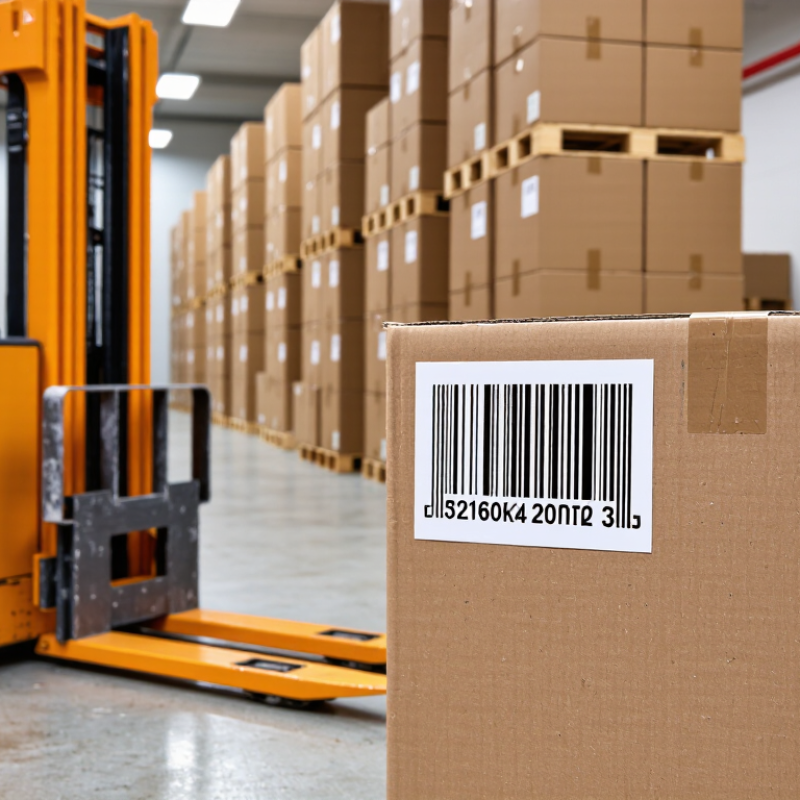
Warehouse barcode labels are printed identifiers that connect a physical location, pallet, carton, or product with digital warehouse records. A scanner reads the pattern, while the warehouse system retrieves item, quantity, batch, and location details. In practice, a label may sit on a dusty rack beam, a plastic tote, or a cold carton. Its readability matters more than its appearance.
The MHI 2024 Annual Industry Report found that 88% of supply chain leaders planned to increase technology and innovation investment within one to two years. Barcode labels remain a practical part of that investment because they support receiving, put-away, picking, and shipping. GS1 standards also emphasize consistent data structures and symbol quality across supply chains. A clear barcode can reduce manual typing, duplicate entries, and misplaced inventory. Small errors become expensive.
Material choice still needs careful testing. Paper labels may work in dry storage, but synthetic labels suit moisture, abrasion, and temperature changes better. A professional China-based supplier should verify adhesive strength, print contrast, barcode grade, and roll dimensions before mass production.
Ask for samples. Test them on the actual cartons and scanners. Reports describe broad industry trends, not every warehouse condition. That limitation matters. A label can pass a factory inspection and fail after weeks of friction. Suppliers should therefore provide traceable quality records and support sensible redesigns when field results expose weaknesses.
Which Barcode Label Types Suit Different Warehouse Operations?
Choosing the best warehouse barcode labels supplier starts with matching labels to daily operations. Receiving docks need durable labels that survive dust, moisture, and repeated handling. Thermal transfer labels work well for cartons, pallets, and storage bins. They resist fading when scanned for months. Small details matter.
Picking areas often need compact labels with sharp, high-contrast barcodes. Direct thermal labels suit fast-moving stock with short storage periods. However, heat and sunlight can darken their surfaces. That makes them less reliable near loading doors. Freezer operations require low-temperature adhesive and flexible materials. Test adhesion on cold racks before placing a large order. One failed test can disrupt scanning.
Rack and pallet locations usually need larger labels, readable from several meters away. Reflective or laminated surfaces can help in dim aisles, but scanners may react differently. Outdoor yards require weather-resistant materials and strong adhesive. Returnable containers need labels that tolerate washing and repeated movement. A reliable supplier should provide material samples, print verification, and application guidance. I have seen warehouses choose labels by price alone, then replace them after peeling corners caused scan delays. That assumption needs reconsideration. The right choice depends on surface texture, temperature, handling frequency, and barcode size. Supplier advice helps, but real-site testing should make the final decision.
How to Evaluate Chinese Warehouse Barcode Label Suppliers
Evaluating Chinese warehouse barcode label suppliers requires more than comparing prices. A 2023 global warehouse vision study reported that 58% of warehouse decision-makers planned to adopt RFID by 2028. Yet barcode labels remain essential for affordable, fast scanning.
Ask suppliers for ISO/IEC 15416 verification records, not only attractive samples.
Test labels on your actual cartons, scanners, ribbons, and storage racks. A label that scans perfectly in an office may fail under dust, condensation, or low lighting.
Review material performance carefully. Thermal transfer labels usually suit long-term identification, while direct thermal labels may fade under heat or sunlight. Request abrasion, moisture, and temperature test results.
Also check adhesive behavior on corrugated cardboard, plastic bins, and recycled surfaces. The 2024 MHI Annual Industry Report found that 55% of supply-chain organizations were increasing technology investment, making reliable identification more important during warehouse upgrades.
Supplier quality systems should include batch records, barcode grading, color controls, and pre-shipment inspection.
Do not trust the lowest quotation alone. Compare defect rates, sampling methods, production capacity, and response times for replacement orders.
A useful supplier should explain limitations clearly. That builds trust. Ask for a pilot batch of at least several thousand labels and measure scan success across different devices.
My practical concern is simple: many evaluations overvalue printing speed and undervalue adhesive aging.
That mistake can remain invisible until labels begin peeling from cold-storage cartons.
Supplier claims still need independent verification.
What Quality Standards Should Warehouse Barcode Labels Meet?
What Quality Standards Should Warehouse Barcode Labels Meet?
Warehouse barcode labels must remain readable after printing, handling, and storage. A reliable supplier should verify every production batch, not only the first sample. For 1D symbols, ISO/IEC 15416 provides a useful print-quality reference. For 2D codes, ISO/IEC 15415 supports consistent verification. Inspection should record symbol contrast, edge accuracy, defects, and overall grade. Clear quiet zones are essential. Small defects become expensive.
Material performance matters just as much. A label for a cold warehouse needs adhesive tested at low temperatures. Labels exposed to dust, moisture, or forklift contact need suitable face stock and protective coatings. The barcode should be tested on the actual carton, pallet, or storage bin. A perfect scan on a clean desk proves little. Ask for samples, scan them with common warehouse equipment, and review batch records. These records should include material details, print settings, verification results, and adhesive checks.
No test covers every warehouse condition. I have seen labels pass inspection but fail after rough handling. That experience deserves more attention. Suppliers should explain tolerances clearly and admit where performance may decline. A dependable quality process combines recognized standards, practical testing, traceability, and honest limitations.
How to Select the Best Supplier for Your Warehouse Needs
China Best Warehouse Barcode Labels Supplier?
How to Select the Best Supplier for Your Warehouse Needs
Selecting a warehouse barcode label supplier requires more than comparing unit prices. Start by checking material quality, adhesive performance, printing accuracy, and delivery consistency. A label may look sharp in an office but fail on a dusty rack or cold loading dock. Request samples that match your actual cartons, pallets, shelves, and scanning distance. Test them with your existing scanners.
Ask how the supplier controls production. Reliable suppliers should explain their inspection process, barcode verification method, roll winding standards, and batch traceability. A professional team can provide test reports and recommend paper, synthetic, or thermal materials for different environments. Confirm minimum order quantities, replacement procedures, packaging protection, and realistic lead times. Clear answers matter more than polished promises.
Communication also deserves careful attention. Can the supplier understand label dimensions, core sizes, gaps, and variable data requirements? Send a simple drawing, then compare the returned sample with it. Small errors become expensive during installation. One overlooked detail is often the label’s removal behavior; it may leave residue on reusable containers. Price should remain important, but choosing the cheapest option can create scanning delays and relabeling work. I would still leave room for doubt. A sample passes today, yet storage conditions may change later. Discuss pilot orders and performance checks before scaling up.