

Blog
Blog
Blog
2026 Best Aluminium Door and Frame Suppliers
Choosing among the 2026 Best Aluminium Door And Frame Suppliers requires more than comparing catalogue prices. The supplier must combine tested materials, accurate fabrication, dependable delivery, and practical after-sales support. A door may look flawless in a showroom, yet fail when coastal salt, thermal movement, or repeated opening exposes weak details.
Industry data supports careful evaluation. The International Aluminium Institute reports that buildings and construction remain major aluminium-use sectors worldwide, while its sustainability research highlights aluminium’s recyclability and long service potential. The International Energy Agency also identifies buildings as responsible for around 30% of global energy demand, making thermal performance increasingly important. These figures do not prove that every aluminium system saves energy. Glass selection, thermal breaks, installation quality, and local climate still decide real results.
The World Green Building Council emphasizes whole-life carbon, not only operational energy. This matters when comparing recycled content, coating durability, hardware replacement, and end-of-life recovery. Suppliers should provide verified test evidence for air permeability, water tightness, wind resistance, thermal transmittance, and acoustic performance. Look for standards such as EN 14351-1, AAMA specifications, or equivalent regional requirements, depending on the project location.
Details matter. Ask for alloy grades, wall thickness, corner-joint methods, gasket materials, finish warranties, and delivery controls. Request recent project references, not polished claims alone. No ranking is perfect. Forecasts differ, certifications may cover only selected configurations, and even experienced suppliers can miss installation realities. The strongest 2026 shortlist therefore balances published data with factory visits, sample inspection, and honest conversations about limitations.
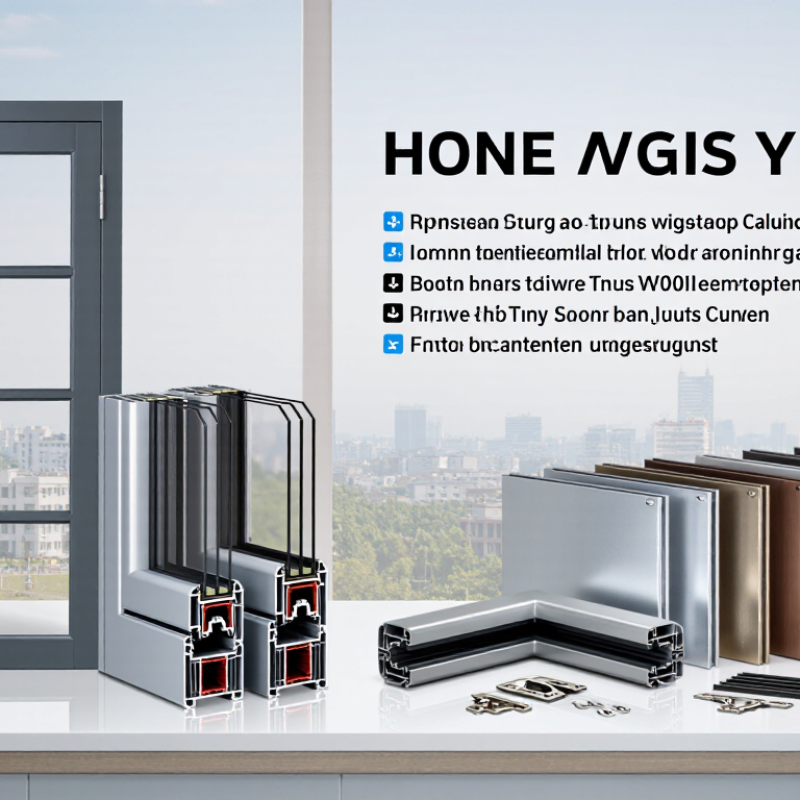
2026 Aluminium Door and Frame Suppliers: Scope, Types, and Selection Criteria
2026 Best Aluminium Door and Frame Suppliers
In 2026, aluminium door and frame suppliers cover more than product fabrication. Reliable suppliers may provide design assistance, shop drawings, glazing guidance, hardware, surface finishing, delivery, and installation support. Their scope should match the project’s real demands, from a small apartment entrance to a coastal commercial façade.
Common types include hinged doors, sliding doors, folding systems, entrance doors, curtain wall frames, and thermally broken assemblies. Each type serves a different purpose. Sliding doors save floor space, while hinged doors often provide simpler maintenance. Thermally broken frames reduce heat transfer through the aluminium profile. In exposed locations, powder coating, drainage paths, and corrosion resistance deserve close attention.
Selection should begin with verified performance data, not attractive images. Ask for alloy specifications, coating standards, air and water test results, wind-load capacity, thermal values, warranty terms, and installation details. Check whether the supplier can provide full-size samples. A corner sample may reveal weak gaskets or uneven finishing. It is also useful to review production controls, packaging methods, lead times, and after-sales response.
One practical lesson stands out. A low quotation can exclude glazing, hardware, flashing, or site adjustments. Small omissions become expensive later. No supplier gets every detail right. Review drawings carefully, especially sill levels and opening directions. Local climate, building regulations, maintenance access, and project schedule should influence the final choice. Supplier reliability is proven through clear documents, consistent communication, and products that perform after installation.
2026 Best Aluminium Door and Frame Suppliers
Aluminium Door and Frame Suppliers: Scope, Types, and Selection Criteria
Frame depth is a practical early-stage indicator when comparing aluminium door systems. Hinged doors generally use slimmer profiles, while sliding, folding, and lift-and-slide systems require deeper frames to accommodate tracks, rollers, drainage, sealing, and higher operating loads. Actual dimensions vary by opening size, glass weight, thermal-break design, wind-load requirements, and local building regulations.
Thermal Performance: U-Values Below 1.6 W/m²K and Thermal-Break Design
2026 Best Aluminium Door and Frame Suppliers
Thermal performance should be a practical test, not a marketing phrase. Specify aluminium doors and frames with U-values below 1.6 W/m²K. This figure indicates reduced heat transfer through the assembly. However, suppliers must clarify whether it applies to the frame, glass, door, or complete unit. Those figures are not interchangeable.
A thermal-break design separates the exterior and interior aluminium with a low-conductivity polyamide barrier. This reduces cold bridging around the frame. Look for continuous insulation, accurate corner joints, and insulated thresholds. On a winter morning, a well-designed frame should feel less cold near the internal edge. Condensation should also be assessed, especially in humid rooms. Small details matter.
Reliable suppliers should provide tested U-values, installation guidance, and certification from recognised testing bodies. Ask for results based on the intended dimensions and glazing specification. A narrow sample may perform better than a larger installed door. Site workmanship can change everything. Poor sealing, misaligned panels, or an uninsulated sill can undermine excellent factory data.
I have found that lower U-values do not automatically mean better performance. Solar exposure, ventilation, drainage, and glass selection still influence comfort. Some product data looks precise, yet installation assumptions remain unclear. That deserves questioning. A careful supplier explains limitations, not just headline numbers.
Structural Quality: EN 12210 Wind Ratings and EN 12207 Air Permeability Classes
2026 Best Aluminium Door and Frame Suppliers
Structural quality starts with verified performance, not polished product photographs. EN 12210 classifies doors and frames by resistance to wind load, deformation, and repeated pressure. Higher classifications indicate stronger performance under demanding conditions, but they do not guarantee suitability for every building.
Ask suppliers for complete test reports, not isolated rating claims. Check the declared wind pressure, frame size, glass specification, and opening direction. A large coastal entrance may need a different class from a sheltered internal courtyard. Installation also matters. Poor anchoring can weaken an otherwise well-tested frame. Small gaps around fixings can become visible during a storm.
EN 12207 measures air permeability through classified leakage levels. Classes range from 1 to 4, with Class 4 providing the tightest tested performance. This detail affects comfort, energy use, and indoor noise. Look for test results linked to the actual door system, including seals, hardware, and threshold design. A replacement seal may look acceptable but still fail under pressure.
Some supplier documents remain frustratingly vague. That deserves scrutiny. Ask whether the test covered the complete assembly or only a laboratory sample. Site conditions are rarely perfect, and workmanship can reduce results. A careful supplier should explain limitations plainly, provide installation guidance, and match EN 12210 and EN 12207 evidence to your project’s exposure, dimensions, and use.
Sustainability Metrics: Recycled Aluminium Content, EPDs, and ISO 14001 Systems
2026 Best Aluminium Door and Frame Suppliers
Sustainability Metrics: Recycled Aluminium Content, EPDs, and ISO 14001 Systems
Choosing an aluminium door and frame supplier in 2026 requires more than checking a green label. Recycled content should be reported by percentage and material type. Post-consumer aluminium usually shows a different impact profile from factory scrap. Ask for verification, not broad promises.
Environmental Product Declarations, or EPDs, provide project teams with comparable lifecycle data. A useful EPD should cover the actual product range, declared unit, manufacturing location, and validity period. I have found that vague EPD references often hide important differences. The frame may have an EPD, while glazing, hardware, or thermal breaks remain outside its scope.
ISO 14001 certification can indicate a structured environmental management system. It does not automatically prove low carbon production. Review the certificate scope, audit date, and manufacturing site. Supplier records should connect recycled aluminium claims with purchase documents and traceable production batches. Small gaps matter.
Tips: Request recycled content evidence, a current EPD, and the ISO 14001 certificate together. Compare like with like. Record assumptions in the tender review. Some suppliers may not yet provide perfect data, and that weakness deserves honest discussion rather than automatic rejection.
Supplier Evaluation: Certifications, Lead Times, Warranties, and Customization Capacity
Choosing among the 2026 best aluminium door and frame suppliers requires evidence, not polished catalogues. The ISO Survey 2022 recorded more than 1.2 million ISO 9001 certificates worldwide. Certification alone proves little, however. Request the current certificate, issuing body, scope, and audit date. For coastal projects, verify corrosion testing, coating standards, and documented batch traceability. A supplier should explain how profile tolerances are checked on the production floor.
Lead time deserves written measurement. The 2024 MHI Annual Industry Report found that 83% of supply-chain professionals expected ongoing disruption. Ask for separate timelines for extrusion, tooling, finishing, glass, assembly, and shipping. A quoted “six weeks” can hide a three-week tooling delay. Get production milestones and a late-delivery remedy. Be careful here. Forecasts are not promises.
Warranty language should identify coverage periods, exclusions, labor responsibility, and finish performance. Ask for project references with similar dimensions and exposure conditions. Customization capacity is more than offering unusual colors. Confirm engineering support, thermal-break options, CNC accuracy, minimum order quantities, sample approval, and the ability to repeat profiles after twelve months. The International Aluminium Institute’s sector reports emphasize recycling and material efficiency; request alloy certificates and recycled-content data when sustainability claims affect procurement. I would still allow contingency time. Real projects rarely follow the first schedule.
2026 Best Aluminium Door and Frame Suppliers - Supplier Evaluation: Certifications, Lead Times, Warranties, and Customization Capacity
| Evaluation Dimension | Market-Realistic Benchmark Data | Strong Supplier Indicator | Recommended Buyer Verification | Priority |
|---|---|---|---|---|
| Quality Management Certification | ISO 9001:2015 is the internationally recognized quality-management benchmark used across manufacturing and construction supply chains. | A current certificate covering aluminium extrusion, fabrication, finishing, or door-and-frame assembly, with a valid certification scope. | Check the certificate number, issuing certification body, validity date, site address, and stated scope directly with the certification body. | High |
| Environmental Management | ISO 14001:2015 indicates a formal environmental-management system; it does not by itself certify recycled content or product performance. | ISO 14001 certification supported by documented recycled-aluminium content, energy data, waste controls, and environmental product information where applicable. | Request the certificate scope, recycled-content declaration, chain-of-custody documents, and project-specific environmental records. | Medium |
| Product and Building-Code Compliance | Requirements vary by destination market. Typical documentation may include air, water, wind-load, thermal, acoustic, fire, and security test reports. | Test reports are issued by an accredited laboratory and match the proposed profile system, glazing, hardware, dimensions, and installation configuration. | Confirm test standards, specimen configuration, test date, laboratory accreditation, performance classification, and applicability to the final design. | High |
| Standard-Product Lead Time | Approximately 3–6 weeks after approved drawings and deposit for readily available profiles, standard finishes, and common hardware. | Written production schedule with material allocation, drawing approval milestones, packing date, and shipment readiness date. | Separate manufacturing time from ocean or land transit, customs clearance, local delivery, and installation time. | High |
| Semi-Custom Lead Time | Approximately 6–10 weeks for project-specific dimensions, non-standard glazing, special hardware, or custom powder-coating colours. | Supplier confirms profile availability, tooling requirements, finish approval, sample approval, and a documented production sequence. | Obtain a milestone-based schedule and written consequences for delays caused by drawings, samples, payment, or material changes. | High |
| Fully Custom or Large Project Lead Time | Approximately 10–20 weeks when new extrusion dies, engineering approval, unusual finishes, special glass, or high-volume production is involved. | Dedicated project manager, approved shop drawings, prototype or first-article inspection, and a capacity plan for the complete order. | Ask for the die-development schedule, prototype approval process, monthly production capacity, and contingency plan for critical components. | High |
| Finish Warranty | Common commercial warranty ranges are approximately 5–10 years for powder-coated or anodized finishes, subject to exposure and maintenance conditions. | Warranty clearly defines colour retention, chalking, film adhesion, corrosion exclusions, coastal exposure limits, and approved cleaning methods. | Review the actual warranty document rather than relying on a quotation statement; confirm the warranty start date and claim procedure. | Medium |
| Frame and Hardware Warranty | Product warranties commonly range from 2–10 years, while moving hardware may carry a shorter period than aluminium frames or fixed components. | Separate coverage periods for profiles, seals, rollers, locks, handles, glass, and finish, with defined replacement or repair obligations. | Confirm exclusions for incorrect installation, salt-air exposure, misuse, poor drainage, unauthorised modifications, and lack of maintenance. | High |
| Dimensional Customization | Most established fabricators can produce project-specific widths, heights, opening configurations, glazing thicknesses, and frame depths within system limits. | Engineering drawings include tolerances, drainage paths, reinforcement, thermal breaks, glass weight limits, and hardware compatibility. | Request approved shop drawings, section details, maximum sash dimensions, allowable weight, and installation tolerances before purchase. | High |
| Colour and Surface-Finish Capacity | Typical options include anodized finishes, powder coating, wood-effect finishes, and project-specific colour matching; availability depends on the finishing partner. | Supplier provides physical samples, finish codes, gloss level, coating specification, batch-control procedure, and a sample-approval record. | Approve a retained physical sample and define acceptable colour variation, surface defects, packaging protection, and inspection lighting. | Medium |
| Glazing and Performance Options | Options may include insulated glass, laminated glass, low-emissivity coatings, solar-control glass, acoustic assemblies, and safety glazing. | Supplier provides glass configuration, U-value, solar factor, visible transmittance, acoustic rating, safety classification, and spacer details where relevant. | Check that performance values apply to the complete window or door assembly, not only to the centre-of-glass area. | High |
| Minimum Order and Sampling | Sample and small-batch policies vary widely; custom extrusion, special finishes, and non-standard hardware may require additional setup charges or minimum quantities. | Transparent sample fees, tooling charges, minimum order quantities, refundable-deposit rules, and production approval procedures. | Obtain written confirmation of which sample and tooling costs are refundable or creditable against the production order. | Medium |
| Pre-Shipment Quality Control | A professional inspection plan normally covers dimensions, finish, glass, hardware operation, accessories, labelling, packaging, and quantity. | Supplier uses inspection checklists, batch records, photographic evidence, non-conformance reports, and corrective-action tracking. | Specify inspection points in the purchase contract and use an independent inspection service for high-value or high-volume orders when appropriate. | High |
| Packaging and Shipment Protection | Aluminium frames generally require corner protection, separation between finished surfaces, moisture control, impact protection, and clear identification. | Export-grade packaging is tested or documented, with crate markings, packing lists, moisture precautions, spare-parts allocation, and loading photographs. | Confirm packaging materials, container loading method, maximum stacking limits, insurance responsibility, and damage-claim evidence requirements. | Medium |
| After-Sales and Spare Parts | A reliable supply arrangement should provide replacement seals, rollers, locks, handles, gaskets, touch-up materials, and installation guidance for the expected service period. | Documented response time, named service contact, spare-parts catalogue, maintenance instructions, and traceable product codes. | Include spare-parts availability, response deadlines, remote technical support, and local service responsibilities in the contract. | High |